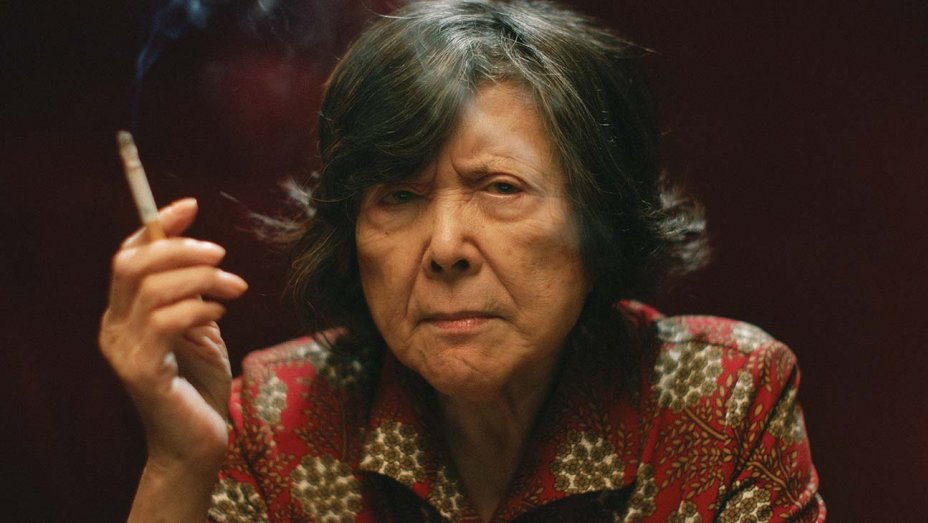
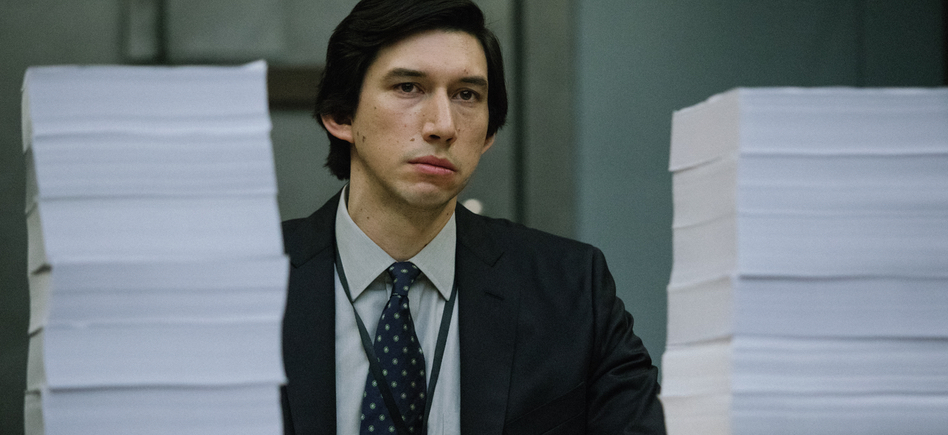
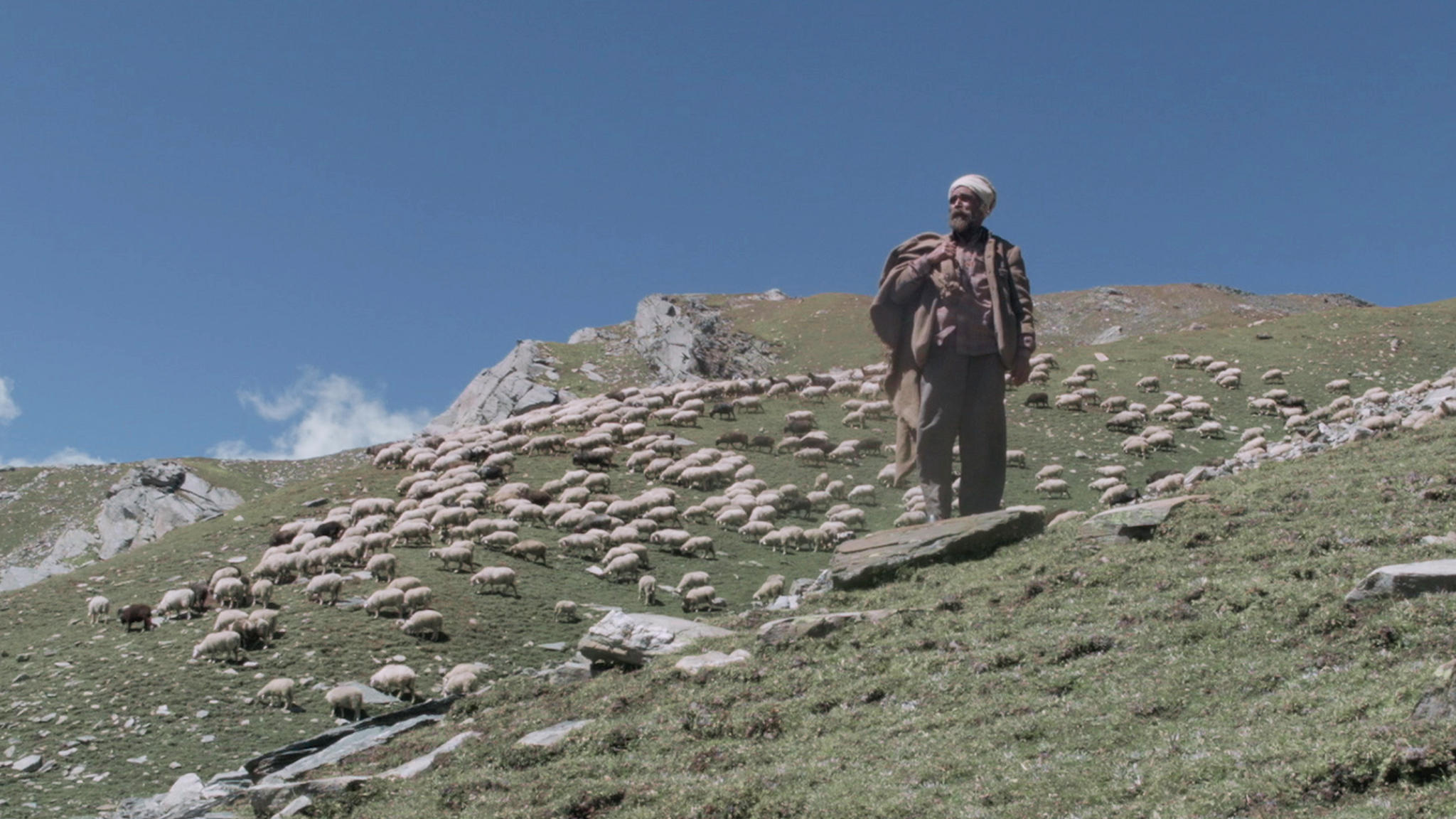
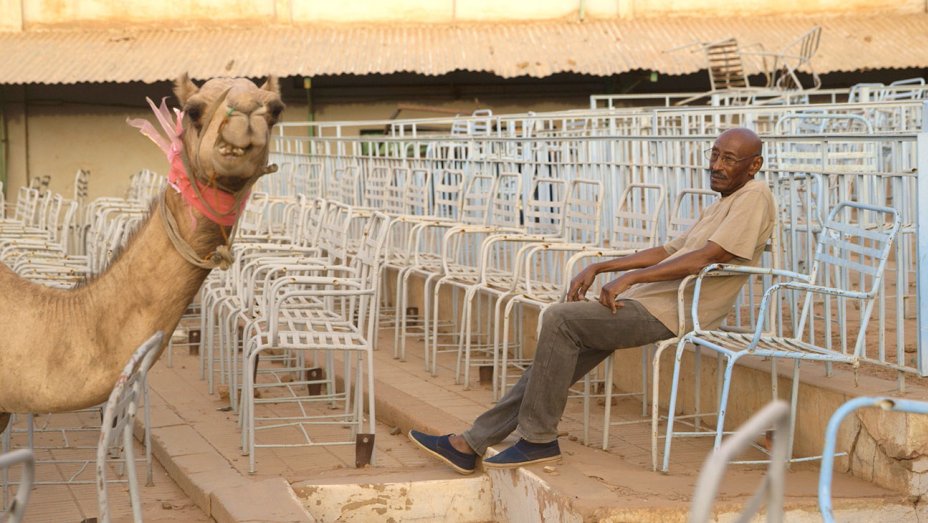
Top 10 Films of 2025

Top 10 Films of 2025

2025 felt like a year in which cinema was fighting for its life. President Trump threatened to impose 100% tariffs on films made “in foreign lands”, while the proposed takeover of Warner Bros Studios by Netflix raised fears of the theatrical experience being weakened in favour of streaming. 

How reassuring, then, that this felt like an exceptionally good year for cinemagoers. There were quite a few excellent films that just missed out on a spot in my top 10: The President’s Cake, an eye-opening portrait of Saddam Hussein-era Iraq through the eyes of a child; No Other Choice, a spiky satire of modern corporate culture; Tornado, a stylish samurai western set in the Scottish Highlands; and The Life of Chuck, the best of several adaptations of stories by Stephen King.

2025 also saw a large number of films which properly reckoned with the abuse of state power across the world – in some cases meditating on the sins of past regimes, in others responding directly to current geopolitics. We will doubtless continue to see such films in the years to come. But the ten films below succeeded less for their politics than for the fact that they were all consistently well-made, engaging, and thematically rich in the best tradition of their craft.

10. Islands

This sun-drenched film noir, set in a picture-perfect resort in the Canary Islands, got very little attention on its release; perhaps it was just too low-key to engage a large audience. But I found it enormously satisfying, with its twisty and enigmatic narrative, and performances full of depth and unspoken secrets.

9. The Ice Tower

Snowy cinematography, ethereal music, and a beguiling performance by Marion Cotillard are the highlights of this supremely unsettling fable, set in a film studio in rural France. 

8. Wake Up Dead Man: A Knives Out Mystery

The darkest and best of the three Knives Out films draws from horror cinema while maintaining its wisecracking sense of humour. The solution, as ever, is ingenious, but it’s the strength of the character study – and the nuanced portrayal of religious characters – that really impressed me.

7. A Real Pain

The idea of an odd-couple comedy based around a tour of Polish Holocaust sites doesn’t exactly inspire confidence. But Jesse Eisenburg’s deft direction, and some terrific performances from the cast, ensure that the right balance is always struck. Frequently hilarious but also very moving.

6. It Was Just an Accident

Few filmmakers exhibit as much courage as Jafar Panahi, who recently received yet another jail sentence for “propaganda” against the Iranian regime. His latest film – shot secretly within Iran – is certainly outspoken in its criticism of the country’s justice system. But it’s the humanist portrayal of its characters – and the farcical nature of the plot – that make this such a powerful work.

5. The Nickel Boys

An unforgettable film, which employs first-person point-of-view cinematography to tell the story of two boys at an abusive correctional facility in Florida in the 1960s. The style is liberating rather than constraining, with an immersive focus on the smallest details of the characters’ lives. Surely destined to become a future American classic.

4. The Secret Agent

An intelligent, stylish, eccentrically-constructed epic set during the dictatorship in 1970s Brazil. Director Kleber Mendonça Filho shows a clear affection for the popular culture and style of the period while deftly critiquing the everyday political violence and gangsterism of the regime. Shot on vintage cameras, it is both a deeply evocative period film and profoundly contemporary in its themes and ideas.

3. The Brutalist

This is monumental filmmaking in every sense of the word. The story of a fictional Hungarian architect who immigrates to the US after the war is novelistic in its length and ambition, but the three and a half hours simply fly by. Adrien Brody gives a tumultuous, muscular performance opposite the mercurial Guy Pearce, and the stunning VistaVision cinematography and experimental score made this a hugely potent big-screen experience. 

2. Marty Supreme

I only saw this on 30 December but it has barrelled into the top 10 with the same brash confidence as the film’s central character, table tennis hustler Marty Mauser. Timothée Chalamet gives an extraordinary performance as Mauser, all reckless self-regard and salesman patter, and the film proceeds at the same breakneck speed of Uncut Gems. But embedded within the high-wire, anxiety-inducing plot are reflections on Jewishness, historical trauma, and the relationship between sport and geopolitics. Unmissable.

1. One Battle After Another

Arguably the most topical and talked-about film of 2025, this is also the best, and the only one that I saw at the cinema more than once. In the current climate of endless remakes, sequels, and superhero movies, it seems remarkable that Paul Thomas Anderson managed to persuade Warner Bros to stump up $150 million for a film that – while surely his most accessible – is still so defiantly original, so idiosyncratic. Thank goodness they did. It’s nothing less than a modern American epic, a suspenseful and wryly ironic tale that encompasses left-wing counterculture, fascistic military officers, mystical karate teachers and desperate asylum seekers. But it’s ultimately a tale of a father and his daughter, and how the weight of the past presses down on them both. Truly magnificent.

I saw 33 new films at the cinema this year, as well as 18 re-releases. Re-release highlights included Empire of the Sun, surely one of Spielberg’s finest and most underrated films; the strange and gothic I Walked With a Zombie; and Kubrick’s Barry Lyndon, which combines stately elegance and restless ambition to brilliant effect.

BFI London Film Festival 2025

BFI London Film Festival 2025

In my mind there are two particularly special signs of the arrival of autumn. One is the gently declining temperature of the water at Tooting Bec Lido, my local outdoor swimming pool. Those entering the water increasingly emit not sighs of relief but gasps of shock, the actual act of swimming delayed for as long as possible. One recent morning, when the lifeguards’ thermometer indicated a water temperature of 14 degrees, there was a thick carpet of leaves spread over the surface, which made my cold 1k feel like swimming through a forest. 

The other sign of autumn, of course, is the London Film Festival. 

LFF is now an essential part of my year in the same way as Christmas, Easter, and birthdays, much to the amusement of my family and friends. This year’s festival was especially fast-paced; I was unavoidably busy on the second weekend, and worked hard to pack in as much as I could.

Making a schedule for the festival each year can lead to some strange juxtapositions: no sooner had I emerged from the staggeringly dark No Other Choice than I had to ready myself for the gentle, family-orientated Rental Family. It is quite the challenge to preserve your critical faculties in the midst of such a kaleidoscopic assault on the senses. But it’s one I gladly face each year in the knowledge that – sooner or later – something very special is likely to come up.

This year, I saw 11 films. Here’s what I made of them.

Few films arrived at the festival with as much fanfare as It Was Just an Accident (★★★★★) from the Iranian director Jafar Panahi, one of a number of films that focused on the experiences of everyday people living under authoritarian political regimes. But then again, very few directors have actually been put in prison for making films. Secretly shot in Iran without proper permits, Panahi’s latest – which won the Palme d’Or at Cannes earlier this year – follows a mechanic who accidentally stumbles across a man whom he believes tortured him in prison. Initially bent on vengeance, he then begins to have second thoughts. Panahi drew on the experiences of fellow inmates during his most recent spell in prison in Iran, and while the tone is initially farcical – the mechanic enlists several other former prisoners to help him, one a soon-to-be bride in her wedding dress – it develops into something far more sombre as the collective trauma of its characters emerges in different ways. Despite the underground nature of the production, Panahi uses image and sound to extraordinary effect – the squeak made by the torturer’s false leg is an especially unsettling presence. What ultimately emerges is another brilliant work of resistance from one of the most courageous artists of the 21st century: at once a trenchant criticism of the brutality of Iran’s theocratic justice system and a humanist exploration of the very ordinary people affected by it.

Jafar Panahi’s It Was Just an Accident

One of Iran’s close neighbours is the setting for The President’s Cake (★★★★☆), an endlessly intriguing debut film set in 1990s Iraq. This was a period in which Iraqis were suffering from the crippling effects of sanctions, with shortages of basic essentials, alongside the threat of American bombs. Yet then-leader Saddam Hussein still required everyone in the country to celebrate his birthday. It’s in this context that the film opens with nine-year-old Lamia being asked to bake a birthday cake for her school. But getting hold of even basic ingredients is an enormous challenge – one to which Lamia, with her pet rooster in tow, rises with great enthusiasm. It’s a beautiful portrait of a troubled country, which captures both the slow rhythm of life in the marshes – where locals visit each other via rowing boat – to the frenetic pace of the city. Baneen Ahmad Nayyef gives an outstanding performance as the young Lamia; the film presents – through her eyes – the moral impact of poverty, with desperation leading to an endless cycle of petty theft. And while smiling portraits of Saddam watch over every public building, mutilated soldiers from his military campaigns hide away in the background. It’s a vivid, moving tale, highly recommended.

It takes a bit of a while to figure out what’s going on in The Secret Agent (★★★★★), the stylish, rambling period epic from Brazilian filmmaker Kleber Mendonça Filho. We follow a man called Marcelo in late-1970s Brazil, who is driving to the coastal city of Recife; he appears to be trying to lie low, despite driving a garish yellow VW Beetle. When he arrives, he finds new digs in an apartment block full of various political “refugees”, ruled over by a 77-year-old matriarch who used to be an anarchist. The film’s style is freewheeling, unhurried, conversational; patience is required as its mysteries are gradually uncovered. The film serves as an intelligent critique of the dictatorship in Brazil – euphemistically referred to as a time of “mischiefs” – and the ways in which it permitted everyday acts of political violence and gangsterism. The film is dedicated to all the victims of the regime, both direct and indirect, and the victims featured here are painfully ordinary. But this is tempered by a clear affection for the popular culture of the period: there are vibrant bursts of music from vinyl records, and some wonderful scenes in an old-fashioned one-screen cinema owned by Marcelo’s father-in-law. Shot with vintage camera equipment, and making liberal use of tracking shots and zooms, it’s an evocative cinematic recreation of a complicated era, at once eccentrically constructed and deeply engaging.

Wagner Moura in Kleber Mendonça Filho’s The Secret Agent

Elsewhere, the Cameroonian film Untameable (Indomptables) (★★★★☆) chooses to explore the impact of violence on its perpetrator as well as on the victim. French comedian Thomas Ngijol plays a Police Commissioner in Yaoundé who is investigating the murder of one of his colleagues. I thought the film was ultimately successful in drawing parallels between the violence of how he treats suspects with the domineering way in which he treats his own family; Ngijol effectively portrays the strain of seeking to reconcile traditional ideals with stern reality. It’s also wryly funny, although I felt it could have done with more humour to lighten the darkness of the piece.

Speaking of darkness – I saw three films this year that made masterful use of dark comedy, albeit in varying shades of black. Wake Up Dead Man: A Knives Out Mystery (★★★★★) is by far the darkest of the three murder mysteries starring Daniel Craig as Benoit Blanc, the impeccably mannered southern detective. Director Rian Johnson this time draws on a different strand of detective fiction – the gothic locked-room mysteries of John Dickson Carr and others – and the crime is anything but cosy. This time Craig shares much of the screen time with Josh O’Connor’s young priest, Jud Duplenticy, who at the beginning of the film is sent to assist at the church of Monsignor Jefferson Wicks, played by Josh Brolin. Wicks is a fire-and-brimstone demagogue – a MAGA Monsignor – who preaches to his dwindling congregation about the moral excesses of the secular world. Yet when an apparently impossible crime takes place in the church, Duplenticy is forced to team up with Blanc to solve it. The film is deliciously drenched in horror cinema – rain-soaked nocturnal forests, expressive use of shadow, the odd jump scare – but is marked by the same wisecracking sense of humour that makes this series such a delight. And I was particularly enthralled by the nuanced portrayal of religious characters – some fastidious and hypocritical, but others, like Duplenticy, fundamentally sympathetic. Josh O’Connor gives an outstanding performance as a man struggling to do the right thing in the face of intolerance and his own past demons. The solution is ingenious, but fundamentally it’s the film’s strength as a character study that marks it as the best Knives Out so far.

Josh O’Connor and Daniel Craig in Wake Up Dead Man

The character study is yet more confrontational in Bugonia (★★★★☆), an exquisite provocation from the Greek director Yorgos Lanthimos. Jesse Plemmons and Aidan Delbis play cousins Teddy and Don, who live in an isolated house somewhere in the rural United States. Intensely immersed in conspiracy theories, they kidnap a CEO of a large company (played by Emma Stone), convinced that she is an alien bent on destroying the earth. It’s an immediately unsettling watch, with the latent violence of Stone’s captors threatening to erupt at any moment. Gleefully over-the-top musical cues and Kubrick-esque tracking shots amplify the sense of fear, until an outbreak of baroque violence that leaves you uncertain whether to laugh or stop breathing. The performances are uniformly brilliant: Plemmons is terrifically sweaty, dishevelled and desperate as Teddy; Delbis monosyllabic and sad; Stone mercurial and barnstorming. And as the film moves forward, we begin to wonder who exactly is trapped, and by whom. Teddy cycles through an apparently empty, post-industrial American town, before packing boxes for a living at a logistics company with scant regard for employee safety. It’s only in the final act of the film that its politics begin to emerge, with a narrative twist that will likely prove controversial. But this is vivid, powerful cinema that lives long in the memory. 

Equally vivid – though not always in a good way – was No Other Choice (★★★★☆), the latest from Korean enfant terrible Park Chan-wook. Park’s film has been talked about as a natural companion to Parasite, focused as it is on the Korean job market and the drastic – even criminal – means by which their characters acquire and maintain wealth and social status. The story follows a paper worker who is suddenly made redundant after a US takeover of his firm. Despite the threat of losing his house, and struggling to look after his wife and two children, he stubbornly insists on staying within the paper industry. But with a dwindling number of positions, he resorts to increasingly desperate measures to ensure that he will be the only man for the job. Park employs a fluid, layered visual style – reflections in objects, partially dissolved shots, split-screen conversations – which gives the film a propulsive energy. It’s also very funny: one pivotal scene of violence plays out with a loud Korean pop ballad in the background, giving it the feel of a soap opera on cocaine. The film’s final act slides into the nastiness and sadism of Park’s early work, which does feel like a tonal misstep. Despite that, it is still fantastically entertaining, and a spiky, trenchant comment on an economic system that increasingly privileges profit over people.

Lee Byung-hun in No Other Choice

A range of films revolved around characters engaged in some process of self-discovery, of understanding themselves and others better – a trait near-universal in cinema, although each of the following varied widely in their reliance on cliché. Diamonds in the Sand (★★★★☆) follows Yoji, a Japanese salaryman who lives on his own in a small apartment in Tokyo. He is profoundly affected by the discovery of the dead body of one of his neighbours, who also lived alone, and decides to take an extended trip to the Philippines alongside the Filipina caregiver for his late mother. In lesser hands this could have turned into a broad culture-clash comedy with some banal message about universal human values. There are certainly pleasures to be had watching Yoji stumbling around Manila, assaulted on all sides by noise and colour, a far cry from his quieter Tokyo existence. But the film – a feature debut 11 years in the making – is in fact a delicate and subtle meditation on the relative values of individualism and communitarianism. Yoji’s stubborn emphasis on personal responsibility comes up against the protect-one’s-own family mentality of the Philippines, where meals are shared and strangers are asked, “Have you eaten?” Lily Franky gives a terrifically understated performance containing much that is unsaid, or unsayable, and there is a gentle and affecting melancholy to the drama.

Lily Franky and Maria Isabel Lopez in Diamonds In the Sand

There’s another, rather more schematic take on Japanese culture in Rental Family (★★★☆☆), which stars Brendan Fraser. It’s a delight to see Fraser acting again, having acquired a special place in people’s hearts (including my own) with a string of hit roles in the 90s and 00s that established him as an agreeable American everyman. He plays Phillip, an out-of-work actor living in Tokyo, who joins a firm which hires out actors to simulate real family members or friends to clients looking for something that they don’t seem to have. Phillip’s experience playing family members and others leads him to form new and potentially life-changing connections. There’s room here for an insightful piece of cinema about the universal messages prompted by a very Japanese sort of business, focused as it is on maintaining appearances and potentially masking painful realities. This isn’t it. The dialogue is often clunky, and the beats of the narrative are predictable and unsurprising. But Fraser is always watchable, and he helps save the film even as it appears to be collapsing around him. His is a performance of earnestness balanced with fatigued resignation, perhaps a reflection of Fraser’s own struggles with feelings of insecurity. Against my better judgement, I couldn’t help but be drawn into the emotional arc of the story.

There’s another Hollywood actor in a foreign country in A Private Life (★★★☆☆), a genre-dabbling drama about a Paris psychotherapist who comes to believe that one of her patients might have been murdered. Jodie Foster gives a brilliant central performance, speaking note-perfect French, as a woman who recalibrates her life and rediscovers her old love as she investigates. It’s also very visually arresting, with some remarkable dream sequences. But the film is unable to sustain an overabundance of ideas. Perhaps the true meaning of the film will be revealed to me in a dream; but until then, it emerges as a little less than the sum of its parts. 

There’s much that is dreamlike in Frankenstein (★★★☆☆), Guillermo del Toro’s sumptuous adaptation of Mary Shelley’s novel. The story is a special one for del Toro: he was taken to see the 1931 Boris Karloff movie at a young age, inspiring a lifelong love of shadows and monsters. Del Toro’s eye for detail thrusts you into the varied environments of the narrative – voluminous libraries, European palaces, the fanciful laboratory – and spares us little of the gore and viscera involved in crafting the creature. The creature design itself occupies a compelling space between complete artifice and real human bodies, and Jacob Elordi gives a powerful performance as the creature, with a hulking gait and a rasping, tortured voice. Oscar Isaac is enjoyably mad as Frankenstein, all wild expressions and gestures, occasionally a bit of a ham. Mia Goth is the one real disappointment in an otherwise excellent cast, with an under-powered and flat performance as Elizabeth. And there is disappointment too in the script, which often features overly demonstrative dialogue. I am still amazed that a character was allowed to say to Frankenstein, “You are the monster,” which gives the impression of a lazy student using SparkNotes to dumb down 200 years of scholarship on the original text. That said, the film is always captivating. With its focus on redemption and reconciliation, its swelling score by Alexandre Desplat, and the fairly conventional shooting style, it has the old-fashioned feel of a classic Hollywood movie. Some may find this grating, but as a cinematic nostalgist I enjoyed it very much. 

Jacob Elordi (more or less…) and Oscar Isaac in Guillermo del Toro’s Frankenstein

BFI London Film Festival 2024

BFI London Film Festival 2024

Following the resolution of the Hollywood actors’ strike in December last year, many of the acting world’s greatest luminaries were back onstage at this year’s BFI London Film Festival, introducing their latest work and giving post-film Q+As. For a week and a half, this brought a sense of cinematic glamour and occasion to the South Bank that is more often glimpsed north of the river in Leicester Square. Ticketholders for films at the Royal Festival Hall were delighted to walk the same red carpet that the stars had only just occupied, a treat rarely afforded to us mere mortals.

For my part, of course, the real excitement of LFF is the opportunity to see a huge range of films from around the world, including those that may not be seen again in UK cinemas. Every year, the much-anticipated programme arrives on my doorstep, and is immediately consulted and annotated. Looking back through my somewhat battered copy, I find various films highlighted in pen, along with the occasional written instruction: “YES PLEASE”; “Hmm…”; “Lol”; “NIC CAGE!” It’s an annual ritual that I savour with the same enthusiasm that many have for the Christmas Radio Times.

This year, I saw 18 films. Here’s what I thought about them.

Freed from the commercial requirement for a happy ending, many films at LFF are determinedly depressing in tone. It is partly for that reason that I always try to see as many comedies as possible, and this year certainly didn’t disappoint. The best of the bunch was Rumours (★★★★★), directed by the Canadian trio of Guy Maddin, Evan Johnson, and Galen Johnson. It starts conventionally enough, as world leaders from the Group of 7 (Japan, UK, France, Germany, Italy, Canada, and USA) meet in the grounds of a German country house to hammer out a joint statement about some unnamed crisis. A few hours into their conference, they suddenly find that everyone else in the grounds has disappeared – and then they start seeing strange things in the woods. Stylistically, the film borrows both from horror cinema and TV soap opera, deploying an over-the-top score and bizarre visual effects to great hilarity. And much of the joy of the film comes from its masterly characterisation. Roy Dupuis’ Canadian PM is cast as a strapping, buff womaniser, sharing past romantic encounters with other G7 members; Charles Dance’s American President has an incongruous and unexplained English accent; and Cate Blanchett’s German Chancellor fuses together Angela Merkel and Ursula Von der Leyen in an irresistible display of calm pragmatism. The writing is incredibly sharp – the very opposite of the bland, empty political language that the film lampoons – and fantastically funny.

The G7 pose with a recently-unearthed skeleton in Rumours

A completely different style was seen in Eephus (★★★★☆), one of those delightful low-key dramas that you can imagine attracting a cult following. In a small Massachusetts town in the 1990s, a group of amateur baseball players meet up for one final game before their pitch is demolished and repurposed by the local school. They play, joke around, and insult one another, prolonging this precious last game as much as they can. There are no great character arcs or narrative twists; just a series of conversations and a bit of sport. The relaxed pace of the narrative – mirroring the pace of baseball itself – allows us to spend unhurried time with the characters, who seem to have found in their regular games something more than just sport: friendship, consolation, and routine. The autumnal cinematography reflects the tone of the film, at once melancholic and warm.

A similar tonal balance is seen in the remarkable Universal Language (★★★★☆), one of this year’s most unique films. Director Matthew Rankin tells the stories of several characters in Winnipeg, Canada; but it’s a beguiling, unfamiliar version of the city, where almost everyone speaks Farsi and all the road signs are in the Persian alphabet. A branch of Tim Hortons, a Canadian coffee shop, looks like a Tehran tea salon. The film essentially takes the aesthetic and language of 1970s Iranian cinema and weaves it into a modern Canadian city. The cinematography is equally distinctive, with characters captured in wide shots, dwarfed by the lifeless Brutalist buildings that surround them. It’s also hilarious, with one key plot point involving the theft of a child’s glasses by an errant turkey. Running through all of this is a touching narrative about the importance of finding a home and community. Overall, it’s an idiosyncratic gem, and exactly the sort of thing I go to a festival to see.

One of the offbeat scenes in Universal Language

Equally unusual, though stylistically very different, was Grand Theft Hamlet (★★★★☆), a British documentary that has already become a festival crowd-pleaser. During the third UK COVID lockdown in January 2021, two out-of-work actors are busy exploring the online world of Grand Theft Auto V. After discovering an open-air arena, they hit upon the idea of staging a production of Hamlet entirely within the game. Amidst the many challenges they face in creating this world-first production is the constant threat of being shot at by other online players. The premise of the film – shot entirely within the game – sounds like something you’d stumble across after too many hours on YouTube; indeed, there are many scenes of bizarrely-dressed strangers gatecrashing the virtual rehearsals. But it’s much more than a gimmick. Indeed, it movingly evokes the sense of frustration and purposelessness felt by creative workers during the pandemic; the depth of commitment to the virtual production contrasts markedly with the dismissive attitude to the arts shown at the time by some UK ministers. The limitations in form are transcended by the expansive and actually very cinematic world of the game, with the filmmakers doing their best to capture different angles and perspectives. All in all, this ended up being one of my unexpected highlights.

Three films reflected various aspects of twentieth-century British history, though in very different ways. One of my most anticipated films of the festival was Steve McQueen’s Blitz (★★★★☆), which demonstrates yet again his instinctive mastery of image and sound, his attention to detail, and his humanist approach to narrative. It follows George, a young boy of mixed heritage, who is evacuated to the countryside in the early days of WWII. Angry at the separation from his mother, he secretly returns to London, and attempts to survive a city bearing the brunt of Nazi bombing. In taking a child’s eye view of the Blitz, McQueen has for the first time produced a 12A-rated fiction film (the others are all 15 or 18-rated). Despite this, the true horrors of the period are never played down: it is at times an intensely visceral experience. The deafening sounds of bombings and fires blend with Hans Zimmer’s palpitating score; the camera is often handheld, throwing us into the tumult and chaos of the period. Moreover, what emerges from the narrative is a more complex history than the heroic “London can take it” propaganda, which continues to endure to the present. The film is Dickensian in its sweep of characters from different classes and skin colours: there is grim opportunism from criminal gangs, and foul racism from members of the public; and yet there is extraordinary kindness and courage from emergency workers and volunteers. It may not be McQueen’s best work, but Blitz has left a lasting impression on me, and I urge everyone to see it.

Just as the Blitz is a cornerstone of Britain’s historical consciousness, so is the story of Ernest Shackleton. During an Antarctic expedition in 1914, Shackleton’s ship, the Endurance, became stuck in the ice, eventually sinking. Against apparently impossible odds, Shackleton saved every single crew member. In Endurance (★★★☆☆), the latest from the makers of Free Solo and The Rescue, this remarkable story is paired with footage of a modern-day group of researchers racing against time to find the wreck of the ship. The historical sequences, which draw partially on Frank Hurley’s footage of the expedition, thrillingly evoke the privation and closeness to death experienced by the crew; despite knowing the outcome full well, the film is genuinely nail-biting. But the dramatic tension is too often disrupted by cutting back to the modern research team. Their story is interesting, but the stakes are far lower than Shackleton and his men, and the film seems a bit lopsided as a result.

The Victorian-era Alexandra Palace Theatre was the grand setting for a very special screening of three silent films that are themselves historical artifacts. Silent Sherlock: Three Classic Cases (★★★★★) screened the first completed works in a landmark project restoring all 45 shorts and 2 features in the Adventures of Sherlock Holmes series, made by the British company Stoll Pictures between 1921 and 1923. In all of these Holmes was played by the stage actor Eille Norwood, whose intelligent expressions, aquiline nose, and expressive eyes are immensely convincing. Arthur Conan Doyle himself was a fan, professing that Norwood’s “wonderful impersonation of Holmes has amazed me.” The films themselves – which were accompanied by live music – are efficiently made and at times hugely suspenseful, making great use of location shooting; it was wonderful to see an interwar Waterloo Station, all steam trains, bowler hats, and luggage porters, as Watson dashed to make one of his trains. The restoration is also very successful, bringing out the sharpness of newspaper clippings and handwritten letters. It was a delightful evening out, and I can’t wait to see the other films.

The stage actor Eille Norwood as Sherlock Holmes in the 1920s

I saw five observational documentaries this year; in other words, films that depict a series of events with minimal interference from the filmmaker. Indeed, the director Kazuhiro Soda appeared onstage before The Cats of Gokogu Shrine (★★★★☆) to outline his “ten commandments” of observational filmmaking, including: “don’t write a script”, “don’t add any music or voiceover”, and “don’t do any prior research”. Having stuck to these principles over several months of shooting in the village of Ushimado in Japan, the result is a charming, unhurried portrait of a seaside community – one in which humans and cats live together and interact at the local Shinto shrine. There is plenty of fun to be had with the feline inhabitants: in the first scene, a ginger cat suddenly grabs the microphone and tries to eat it. But there’s also a growing sense of concern at the capacity of largely elderly locals to look after the cats – something which mirrors the ageing population and urbanisation of Japan as a whole.

One of the resident moggies in The Cats of Gokogu Shrine

A more experimental observational style was seen in Mati Diop’s Dahomey (★★★★☆), which follows the return of 26 West African artifacts – looted from the Kingdom of Dahomey by French colonial troops – to a gallery in modern-day Benin. This journey is narrated by one of the artifacts itself, a statue representing King Ghézo, a former Dahomeyan King. The statue’s sonorous voice, speaking in the Fon language, first booms out at us from the darkness of a wooden storage unit; a reminder that most objects in museum collections, whatever their origins, aren’t actually on display. Diop’s camera captures the movement and careful unpacking of the items, and also the reactions of local people, alongside hypnotic electronic music. It’s an atmospheric and quietly political work that contributes to an ongoing discussion without being overly prescriptive. Indeed, the film’s portrayal of a local university debate – where students express a wide range of views and sentiments on the Dahomeyan artifacts – brilliantly underlines the complex issues raised by the return of historic objects to their country of origin.

A different African story is portrayed in Rising Up at Night (★★★★☆). The film portrays life in Kinshasa, Democratic Republic of the Congo, where millions lack access to electricity and rely on torches to get around at night. Shot almost entirely at night, it’s a very visually distinctive film, its subjects barely visible or garishly lit up by LED torchlight. In effectively plunging the viewer into darkness, it illuminates all the more clearly the corruption and lack of infrastructure in the DRC, and the impact of this at a local level.

Many of the films I’ve described so far benefit from knowing as little as possible about them in advance. The opposite seems true of Architecton (★★★☆☆). Had I known beforehand that Victor Kossakovsky’s documentary was in part a critical statement on the use of concrete in modern buildings, I might have been less mystified by the first two thirds of the film. As a reflection on humanity’s relationship with the built environment – alongside our capacity to destroy it – it is nothing short of stunning. Slow-motion scenes of falling rocks – extracted from mountains to make cement and concrete – are juxtaposed with sweeping drone shots of ruined tower blocks in Ukraine and Turkey, devastated by war and natural disasters. But the lack of explanation or argument until the final moments of the film blunts its political critique.

One of the fascinating visual landscapes in Architecton

Some films were shot through with a palpably mysterious tone, revelling in ambiguity and refusing to spell out their meaning to the audience. That said, the line between mysterious and mystifying was often a thin one. On the right side of that line was Crocodile Tears (★★★★☆), a supremely unsettling Indonesian drama depicting the peculiar relationship between a mother and son who run a crocodile theme park. The mother is very overbearing, stunting her son’s social skills; when the latter starts dating someone, the familial relationship becomes steadily more tense. You can’t help but feel a sense of dread at the constant onscreen presence of crocodiles; but equally unnerving is the masterful performance of Marissa Anita as the mother, who kept me constantly on edge with her movement and facial expressions. As an offbeat character study, it is quietly terrifying.

Rather less terrifying, but still very offbeat, was Sofa, So Good (★★★☆☆), an endearingly amateurish American indie film directed by three brothers in their hometown of Dayton, Ohio. It’s a shaggy dog story of two cousins who buy a sofa and are forced to lug it back to their house on foot. Shot on a microbudget over multiple weekends, the film’s technical limitations are often apparent: some of the dialogue is inaudible, and certain scenes exhibit too much camera shaking. That said, a range of absurdist and hallucinatory sequences show a visual and comedic ambition greater than its execution. I particularly enjoyed the antics of a nihilist anti-sofa group, who threaten the cousins over their cowardly embrace of bodily comfort. It’s the sort of flawed but fascinating calling card that marks its creators as well worth watching.

The cousins enjoy their new furniture in Sofa, So Good

Two films, meanwhile, fell on the wrong side of the mysterious/mystifying line. Happyend (★★☆☆☆) depicts high-school students in a near-future Tokyo contending with an authoritarian headmaster and advanced new surveillance techniques. It’s a promising set-up, but the stilted drama and thinly-drawn characters made this a great disappointment. Elsewhere, Hanami (★★☆☆☆) tells the story of a young girl in Cape Verde who is orphaned at a young age. The beginning and end are excellent, with stunning cinematography, but they are hampered by a ponderous, baffling middle section, which left me fighting the urge to fall asleep.

Three films drew on the thriller genre, though in very different ways. Based on a Robert Harris novel, Conclave (★★★★☆) follows the power struggles and intrigues of a group of cardinals as they deliberate over who to elect as the next Pope. As the central figure of Cardinal Lawrence, Ralph Fiennes delivers a terrific performance, displaying age-lined weariness as he struggles to maintain unity among his colleagues. And just as the film plays on the splits between liberal and traditionalist cardinals, so the cinematography captures both the grandeur and the mundanity of the process: outside the Sistine Chapel, where the conclave takes place, cardinals scroll on their phones and even smoke vapes. I did feel that the music was overly pointed at times, and a last-gasp twist felt entirely unnecessary. Nonetheless, this is a tense and satisfying drama that never takes itself too seriously.

Where Conclave is very much an interior film, lodged in the corridors of the Vatican, The Surfer (★★★★☆) takes place almost entirely outdoors. Nicolas Cage plays a businessman who returns with his son to the beach in Western Australia near where he grew up. He hopes to take his son surfing and eventually buy back his old house. But a large group of all-male surfers refuse him access to the waves: “Don’t live here, don’t surf here.” Cage is determined to stay put, but the surfers expand their campaign of aggression, pushing him ever further to the edge. With its psychedelic, sun-drenched visuals, it’s a pulpy thriller that nods to Australian exploitation cinema of the 1970s. Yet it’s also a sardonic depiction of regressive forms of masculinity that are increasingly finding audiences online: Andrew Tate on a surfboard, if you will. Cage has played these sorts of roles before, but he is always watchable, and a third-act narrative twist transforms the film from the expected “revenge movie” outcome into something altogether more arresting.

The indomitable Nic Cage in The Surfer

Regressive masculinity is also one of the key themes of The Seed of the Sacred Fig (★★★★★), an incendiary film which hits with all the force of a bomb. I have never seen an Iranian film which demonstrates such unbridled anger at the country’s autocratic regime; indeed, its director, Mohammad Rasolouf, fled Iran with several members of the cast and crew after finishing it. Shot in secret, the film tells the story of Iman, a husband and father of two teenage girls who has just been appointed an Investigating Judge in Tehran’s Revolutionary Court. The appointment happens to coincide with the death of Mahsa Amini at the hands of the Iranian morality police – an event which sparks nationwide protests and violent repression, and which threatens to pull Iman’s family apart. The film masterfully portrays the impact of Iranian theocracy and its misogyny and repression on an individual family. Rasolouf doesn’t shy away from the violence of the regime: videos of actual protests and police brutality pepper the film like bullets. Yet there are other, more subtle horrors: the insidious creep of the state in TV propaganda, the blindfolded interrogations. Some may feel that the final act, which increasingly delves into genre filmmaking, is too much of an aesthetic departure. But the film’s potency as a character study – as well as a portrait of a corrupt regime – never falters. There may be better films released this year, but none braver.

Mohammad Rasolouf’s incendiary The Seed of the Sacred Fig

On the Lloyds TSB advert at BFI Southbank

A spectre is haunting the screening rooms of the BFI Southbank – the spectre of anti-capitalist resistance.

Over the past few months at the British Film Institute’s flagship London cinema, increasing numbers of audience members have begun heckling the sole commercial advert shown before film screenings: an advert for the bank Lloyds TSB. It’s an unusual move for audiences at the BFI, who are generally very well-behaved. Seeing a film there is a blissful experience: mobile phone usage and other disruptions are extremely rare, with audience members observing the respectful silence of a Quaker assembly. So how did this mutinous situation come about? And how long will it be before this once-genteel cinema is rocked by revolution?

The BFI Southbank was historically one of the very few cinemas in London which showed no commercial adverts before the main feature. This was partly because the BFI is part-funded by the UK Government and by private donations, and so could afford not to do so. Moreover, commercial adverts felt at odds with the BFI’s status as a charitable organisation. It has a range of important national responsibilities: enabling UK film production through National Lottery grants and other funding sources; running one of the world’s greatest film and television archives; and supporting educational work across the country.

At some point in the past five years – I believe it was just after the COVID pandemic – the BFI made the decision to begin screening a single commercial advert just before the main feature. If I remember correctly, the first one was about a car, and featured the usual montage of feeble visual metaphors and implausibly empty roads. This was eventually replaced by an advert for Lloyds TSB, which featured a herd of black horses making friends with local urban teens. After this played for about a year, a second Lloyds TSB advert started (dis)gracing our screens. In this head-banging monstrosity, a young female mountain biker falls off her bike in the forest, but is then buoyed by her tender encounter with another black horse. (Don’t these horses have anything better to do?) Having grown up, and presumably learned from the horse how not to fall off, our helmet-clad protagonist cycles boldly across a meadow, behind the text: “Smart Start: The bank account for 11-15 year olds”. An earnest voiceover intones: “Lloyds Bank – by your side.” Playing throughout this worthy sequence is Alicia Keys’s Girl On Fire, a song which I have now heard far too many times. Judging from the collective groans whenever the advert starts playing at the BFI, so has everyone else.

There are all sorts of reasons why the BFI might have deemed it necessary to introduce this solitary advert. Like many other cultural institutions, the BFI lost huge amounts of revenue during the COVID pandemic, although it did have significant roles in supporting the film industry to restart production and helping other cinemas to survive. The energy costs required to heat and cool a large building rose considerably after the Russian invasion of Ukraine. Indeed, pretty much everything – from construction costs to plumbing – is more expensive these days. Lloyds provides banking services and other support to the BFI, and running one of their adverts may well be helping them meet those rising costs.

That sort of thinking hasn’t quite got through to a growing section of the BFI’s audience – especially those who have been seeing films at the Southbank for a long time. As early as 2022, one regular cinemagoer began roaring various objections to the advert just after it finished. Once the line “Lloyds Bank – by your side” was pronounced, this brave revolutionary would respond by shouting one of the following phrases: “RUBBISH!” “Bollocks!” “It’s a disgrace!” This would invariably be met by knowing laughter from the rest of the audience.

I once sat next to this man at a screening of Powell and Pressburger’s 1957 film Ill Met by Moonlight, and was highly amused by his rallying cry of “RUBBISH!” at an advert I had long since grown to dislike. I was less amused by his regular mumbling to himself throughout the film, which I presume was involuntary. Whenever something of any interest happened onscreen, he would say quietly, “hmm”, or “ohhh”. Not a problem, perhaps, when seated further away, but very irritating up close. I did chuckle when, in response to a close-up shot of stewed dumplings, he simply said: “Yum.”

In the past few months, however, anti-Lloyds sentiment has spread beyond this bedraggled eccentric. The number of screenings I have attended which feature some kind of outburst has begun to outnumber those without. At one recent screening of Mishima: A Life in Four Chapters, it seemed as if the Lloyds advert was shouted down by half the audience: “Rubbish!” “It’s a bank!” “That’s not real cinema!” “They’ve closed down my local branch!” One hopes that no Lloyds employees were in attendance at that one – although, perhaps they should have been, so that they could take on this virulent feedback and make another advert which would represent, indeed, “real cinema”.

The BFI is a truly wonderful organisation that does a huge amount of good for UK film; it doesn’t really deserve any blame for employing a single advert to help its running costs. It could do far worse – other cinemas typically show a mind-numbing 20-30 minutes of adverts. That said, these rumblings of discontent are not only a hilarious and harmless addition to the best cinema experience in London; they also expose how little of their reputations high-street banks have recovered 16 years after the global financial crash.

We might one day see something new take the place of this loathsome Lloyds advert. Until then, the once-silent BFI audiences will continue to voice their discontent – a transition as jarring as the coming of sound cinema itself.

BFI London Film Festival 2023

BFI London Film Festival 2023

This year’s London Film Festival felt paradoxically both busier and quieter than usual. Busier because audience numbers just seem to grow and grow, with most screenings eventually selling out completely. (This was great news for the festival organisers, though rather less good for the legions of people battling to get tickets to the one screening of Chicken Run: Dawn of the Nugget.) Quieter because members of the acting union SAG-AFTRA are still on strike over wages and conditions, and few if any actors were to be seen on the red carpet.

The absence of actors meant a different sort of discussion at pre-film introductions and post-film Q+As. The emphasis was on screenwriting, directing, music, and visual style, rather than on character and performance. For someone who has always been more interested in the people behind the camera than those in front, this was a welcome shift, though I hope a temporary one. Many of the films I saw this year will be distributed by Netflix, which alongside other streaming companies has been a major cause of both the writers’ and actors’ strikes (largely because of their stingy remuneration policies and dabbling with AI). Indeed, while small production companies like Aardman incited warm cheers or nods of appreciation from the festival audience, the Netflix logo was met with stony silence and the occasional boo.

The streaming services do, of course, give directors a greater degree of freedom than many traditional production companies; it’s unlikely that Martin Scorsese could have made Killers of the Flower Moon, a festival hit running to three-and-a-half hours, without funding from Apple TV. But sometimes this comes at a cost: Netflix allows its new releases little more than a few weeks in cinemas before they become mere “content” on its platform, to be absorbed in whatever form the viewer wishes. This is farcical: if LFF 2023 taught me anything, it was the continuing vitality and importance of the big screen. Put simply, nothing compares to the shared experience of the cinema, and the festival’s growing popularity suggests that many still agree.

This year, I saw 16 films. Here’s what I thought of them.

I kicked off the festival with David Fincher’s The Killer (★★★★★), one of many films portraying highly distinctive and unusual characters. The killer of the title is an assassin-for-hire, played by Michael Fassbender, who is fastidious about doing his job properly and leaving no trace. He lives by the motto “Stick to the plan. Anticipate, don’t improvise,” but when one of his assignments goes wrong, his tightly controlled world begins to unravel. The shadowy cinematography, pulsating music and increasingly frantic editing brilliantly evoke the killer’s vigilance and anxiety. It’s a real nerve-shredder, but with great wit and detachment: Fassbender’s character narrates the story in the manner of a classic film noir – knowing, ironic, wryly amused. While waiting for his targets to appear, he passes the time by listening to The Smiths and practising yoga. It’s a terrific, full-blooded performance, and Fincher’s best film since The Social Network.

Michael Fassbender in The Killer

A rather different sort of (non-)assassin is on display in Hit Man (★★★★☆), which is further evidence of director Richard Linklater’s talent for creating great characters. Star and co-writer Glen Powell plays Gary Johnson, a Philosophy professor at the University of New Orleans, who spends some of his time working for the city police. He begins posing as a gun-for-hire to lure unsuspecting would-be murderers into the hands of the cops. And then he falls in love… It’s partly based on a true story, though with a rather freewheeling approach to key details – all part of the fun – and balances moments of incredible tension with gasp-inducing comedy. I saw this on a Wednesday afternoon and I would happily have spent another hour in the company of its characters.

The same could be said for Molli and Max in the Future (★★★★★), one of the great discoveries of this year’s festival. The film takes place in a future universe which echoes the rainy, overbuilt, media-saturated cityscapes of Blade Runner and The Fifth Element. Its characters are sentient robots, demigods, and aliens. And yet they talk and behave like highly-strung New Yorkers who spend all their time philosophising in bars and complaining about their therapists. It’s essentially a sci-fi retelling of When Harry Met Sally, with the two main characters falling in and out of each other’s lives over the course of many years. Except, of course, one of the characters is a half-man-half-fish hybrid, and the other is able to fly. The joy and hilarity of the film come from how brilliantly it riffs on our messy modern lives. There are nods to social media, online dating, and even Donald Trump, while the attention to detail is astonishing: packages are delivered by Amazon Slime, while one of the characters keeps a book by Sally Rooney called Normal Aliens. I laughed uproariously but also gasped at its visual ambition: the film was made with a tiny budget and skeleton crew, but uses practical and visual effects to create a world that is just as stunningly realised as any contemporary blockbuster. But despite the intergalactic setting, the characters still feel down-to-earth: I found myself rooting for the central couple, sharing in their joys and pains, and hoping that they would end up together. It’s the debut feature of US filmmaker Michael Lukk Litwak and I thought it was magnificent.

Zosia Mamet and Aristotle Athari in Molli and Max in the Future

Another debut was rather less successful. Poolman (★☆☆☆☆) is Chris Pine’s attempt to capture the noirish atmosphere of The Big Lebowski and Chinatown, but without the skill, wit, or originality of either. It follows a lazy swimming pool technician who uncovers a trail of corruption linked to the local government of Los Angeles. The cast is promising, but they are wasted on a poorly-disciplined script, executed with no comic timing at all. I found it side-splittingly unfunny and a bizarre disappointment.

As ever, I saw several films this year that reflected in some way the art of filmmaking. The best of these by some distance was Cobweb (★★★★☆), a South Korean farce about a director in the 1970s who tries to do two days of reshoots on his horror film. The director – engagingly played by Song Kang-ho – is convinced that he is creating a masterpiece, but he hasn’t reckoned on the simmering resentments emerging between his actors and crew. Moreover, he hasn’t told the government censors about the reshoots, which puts the whole studio in danger of being shut down. The film satirises the South Korean film industry in the 70s, and the ways in which the creative industries chafed under authoritarian rule. It’s also a wonderfully funny and tightly constructed farce, with more than a hint of Noises Off as the film crew’s foibles lead from one disaster to another. If that wasn’t enough, it’s also a stirring portrayal of creative passion and our collective love of cinema that left me grinning from ear to ear.

The crew look on quizzically in Cobweb

Creative passion was also at the heart of Croma Kid (★★★☆☆), surely the only offbeat sci-fi drama from the Dominican Republic I am likely to see this year. Set in the 90s, it follows a family who make eccentric public-access TV programmes using green-screen effects. It’s a vibrant and colourful evocation of the Dominican setting, but it takes a while to get going; its enigmatic and low-key style is most effective in the final third. Equally enigmatic and low-key was Close Your Eyes (★★★☆☆), only the fourth feature film made in fifty years by legendary Spanish director Victor Erice. I love Erice’s first two films, which are a beguiling combination of painterly cinematography, subtle, often near-silent sound design, and a keen sense of magical realism. His latest follows a former director who searches for an actor friend who went missing years ago – a wry comment, perhaps, on Erice’s own absence from filmmaking. The opening – part of an incomplete film-within-a-film – is Erice’s style at its best, and the ending is a hugely affecting paean to the interrelationship of cinema, time, and memory. Yet much of what happens in between is baggy, rambling, and comparatively pedestrian in style. At times I found myself wishing that I was watching the film-within-a-film, rather than the modern-day story. There are meaningful moments and ideas, but it could have been much more powerful if it were half an hour shorter.

The London Film Festival is always a great moment to opportunity to catch up on world cinema, especially from countries whose culture we may know little about. If Only I Could Hibernate (★★★★☆) is only the second film I have seen from Mongolia, but its story and milieu are quite some way from the vast plains and nomadic culture usually associated with the country. This is a decidedly urban film, one which takes place in the city’s impoverished suburbs. It follows a teenage boy who is trying desperately to provide for his family, who all live in a small yurt, while also attempting to succeed academically. The tension between his two goals only deepens as winter drags on and he struggles to afford coal and wood. The film explores the issue of air pollution with great subtlety and nuance – the characters suffer unexplained respiratory illnesses, and the camera brilliantly captures the thick smog that hangs over Ulaanbaatar like ethereal prison bars. There’s similar care taken in its portrayal of wealth disparities, and on the varying effects of extreme cold. But first-time director Zoljargal Purevdash also ensures that there’s something to root for: the central character’s pursuit of a National Physics competition is a wonderful paean to the transformative value of education. The film – beautifully shot, sincere, political – heralds a compelling new voice in world cinema.

The family share a tense moment in If Only I Could Hibernate

An equally misty setting pervades Only the River Flows (★★★☆☆), an enigmatic, slow-burn Chinese mystery about a detective investigating a set of interlinked murders in rural China in the 1990s. The 16mm cinematography emphasises the hazy, noirish atmosphere, much of which feels like a cigarette smoke-infused dream. The plotting is a little uneven, but I enjoyed getting lost in the darkness. Behind the Mountains (★★☆☆☆) also left me feeling rather lost, though in a much less positive sense. The film tells the story of a mentally unstable Tunisian man who takes his son into the mountains, for reasons which increasingly border on the magical. There are moments of transcendence, but it can’t quite decide on a particular mood or approach, and I found it a bit directionless.

For many at the festival, the main event was the world premiere of Chicken Run: Dawn of the Nugget (★★★★☆), a full 23 years after the release of the original film. Aardman rarely disappoint, and their painstaking attention to stop-motion detail and anarchic, very British sense of humour are on full display here. Where the first film was an escape movie, this is more of a heist film, with all the high-tech trappings of a James Bond film. The film follows the crew from the first film – albeit with several changes to the voice actors – as they seek to recover something stolen from them. It may not be as good as the first film, but it’s still streets ahead of the competition when it comes to animated children’s films. I found it joyful and uproariously funny, shot through with an uplifting feminist message; further evidence of Aardman’s position as an essential part of our cinematic heritage.

The original crew – plus some new additions – in Chicken Run: Dawn of the Nugget

Rather different in tone was the latest – and perhaps final – film by Hayao Miyazaki, the Japanese master director of some of the greatest animated films ever made, including Spirited Away and Princess Mononoke. The 82-year-old Miyazaki has threatened to retire on at least four separate occasions, but The Boy and the Heron (★★★★☆) further demonstrates his astonishing creative energy. Much like his other films, this one focuses on a child who learns to deal with traumatic events by an interaction with a fantastical world. The film is just as beautifully layered and elegantly enticing as ever, inhabited by strange magical creatures, and imbued with lyricism. The meaning of the film isn’t very easy to divine – additional viewings are surely necessary to unwrap its mysteries – and it didn’t feel quite as consistent as some of his other works. But as sheer experience, it immerses you in its world like a dazzling kaleidoscope.

Miyazaki’s last film? The Boy and the Heron

The word “dazzling” also came to mind during The Black Pirate (★★★★☆), a classic 1926 silent film which was part of LFF’s “Archive” strand. It’s an agreeably straightforward aquatic adventure, awash with swashbuckling, romance, and a range of rambunctious characters. The dashing Douglas Fairbanks pulls off some genuinely thrilling stunts, which on this occasion were accompanied on live piano by the supremely talented Neil Brand. What makes it more distinctive than other pirate-themed silent films is its very early use of technicolor cinematography. Following a new restoration by New York’s Museum of Modern Art, the colours really do pop out of the screen – I gasped as the first image came up.

The final three films I saw were all based to some extent on a true story, although with very different cinematic approaches. The rousing sports biopic Nyad (★★★★☆) has a winningly unconventional subject: a woman in her 60s who attempts to swim between Cuba and Florida, a distance of some 110 miles awash with sharks, box jellyfish, and potentially fatal weather. Swimming, happily, is one of the few sports in which age is not a significant barrier to achievement. Played by Annette Bening, Diana Nyad is a force of nature, single-minded in her pursuit of a successful swim, even if it alienates those she loves the most. There’s a remarkable verisimilitude in her performance, with her body and face convincingly reflecting the mental and physical privations of the swim. The filmmakers also made The Rescue, about the efforts to save a Thai children’s football team from a flooded cave system, and the editing here is similarly breathless, with real archive footage interwoven with fictional scenes. Some may feel that some scenes of trauma are too summarily dealt with, but it is the kind of film that makes you want to punch the air – and put on a swimming cap.

Where Nyad is a predominantly exterior film, The Goldman Case (★★★★☆) takes place almost exclusively inside a small courtroom. The film’s dialogue is based on transcripts from the 1976 trial of Pierre Goldman, a French left-wing activist and provocateur who was charged with several robberies and the murder of two pharmacists. Arieh Worthalter gives a magnetic performance as the charismatic Goldman, who insults the prosecution, taunts witnesses, and launches diatribes against police racism and corruption. It deals with big themes that are sadly still relevant in contemporary France, including antisemitism – Goldman was Jewish – and the gaps in France’s understanding of race and ethnicity. Despite the limitations of its setting, I found it absolutely riveting.

Arieh Worthalter in The Goldman Case

Just as riveting, though much less dialogue-heavy, was The Zone of Interest (★★★★★), the best film I saw at this year’s festival. It’s a masterwork of extraordinary power and ambition by the British director Jonathan Glazer – a film about the Holocaust, but with a very distinctive visual focus. It takes place in a house bordering the Auschwitz concentration camp, occupied by camp commandant Rudolf Höss and his wife and children. The Höss family lead an apparently bucolic existence of horse-riding, gardening, and swimming, largely oblivious – or indifferent – to the mass slaughter taking place mere metres away. We seldom, if ever, set foot inside the camp, but expressive wide shots and unsettling sound design remind us of its horrors. Auschwitz’s barbed-wire walls adjoin the family garden, and Höss’s wife blandly tells her mother that they have planted some bushes to make them prettier. The delighted screams of children playing intermingle with the faint roar of SS guards. Höss smokes a cigar at night, his back turned to one of Auschwitz’s chimneys shooting out smoke from a gas chamber. Formally Glazer keeps a cool distance from the characters – there are no close-ups – echoing the mechanistic detachment of Nazi guards. It is a film that reminds us that the monstrousness of the Holocaust was to be found not just inside the camps themselves, but in the dinner parties, lounges, and gardens of Nazi oppressors – in their relentless insistence on normality, unburdened by the bloody work of genocide. As an artistic statement on the banality of evil – and as an example of how events offscreen can be far more frightening than events onscreen – it is simply staggering, and unlike anything I have seen before.  

Jonathan Glazer’s masterful The Zone of Interest

BFI London Film Festival 2022

BFI London Film Festival 2022

The BFI London Film Festival made a rip-roaring return this year, extending its programming further and wider into film, television, and virtual reality. LFF has historically been seen as a second-order festival – simply picking up the best from Cannes, Venice, and elsewhere for British audiences. But under Festival Director Tricia Tuttle, who is stepping down at the end of this year, the festival’s international profile has been significantly boosted. This year there were an unprecedented 23 world premieres, including the latest from Guillermo Del Toro and Asif Kapadia.

But LFF is also a deeply public festival, which shuns the elitism and overwrought prestige of Cannes in favour of large public screenings, where people other than journalists, filmmakers and celebrities have access to tickets. It’s a festival where ordinary cineastes can walk on the red carpet – where friendly interactions between filmmakers and audience members are delightfully unremarkable. With a vast range of screenings across London, and some in cinemas across the UK, LFF broke its own box office records days before it had even finished. It was a joy to attend this year alongside such enthusiastic audiences, and LFF 2022 was probably my best festival yet.

This year, free from the shackles of COVID anxiety, I managed to see 20 films. Here are my thoughts on them.

Eco-cinema

Filmmakers have long drawn attention to issues of climate change and environmental harm, and this year I saw four films that tackled these themes full on. The Danish documentary Into the Ice (★★★★★) follows three scientists who work on the Greenland ice sheet, which covers a vast territory of 1.7 million square kilometres. One of their primary goals is to measure how quickly the ice is melting, which will provide insights into the scale of future sea level rises. Some of this work is extremely difficult to carry out, and the most striking sequences are when the director accompanies the British glaciologist Alan Hubbard in abseiling nearly 200 metres into a “moulin” – effectively a cathedral-sized hole in the ice, created by meltwater – in order to take measurements. What emerges from this is some of the most breathtaking footage of the natural world I have ever seen. The film succeeds in being both a powerful appreciation of the natural world and an urgent call for action to mitigate climate change.

Set on the other side of the world, in the Bolivian Chaco desert, the gentle and beautiful Utama (★★★★★) follows an elderly Quechua couple who are nearing the end of their lives. Their simple existence herding llamas in the desert is made increasingly difficult by the persistent lack of rain and their own old age. From a cast of entirely non-professional actors, director Alejandro Loayza Grisi obtains two utterly extraordinary performances from the actors playing the couple. There is a very real and moving sense of a husband and wife who have said so much to each other over the years that little more needs to be said. Glances, furrowed brows, and silence speak loudly enough. And the film perfectly balances the small-scale with the epic. Grisi shows minute attention to the details of clothes and possessions, while also harnessing the vast cinematic scale of the desert landscape; in the same way, a small story of an elderly couple acts as a powerful metaphor for the broader narrative of traditional ways of life coming under threat from globalisation and climate change.

José Calcina in Utama

Environmental harm is at the centre of two other films, including the French thriller The Blaze (★★★★☆), which follows a father and son in rural France who are trapped by a sudden and seemingly uncontrollable wildfire. Climate change is never actually mentioned in the film – instead, the increasing prevalence of wildfires is taken as a given, and the film focuses more fully on the father-son relationship. It’s incredibly technically well-done, giving the audience a visceral sense of the scorching heat, the sweat, the smoke, the dehydration. But the performances are also deeply convincing and nuanced, making the story all the more moving. Less successful is EO (★★★☆☆), a reimagining of Robert Bresson’s Au Hasard Balthazar with the same central conceit: a donkey wanders through the world, seeing and experiencing both the goodness and evil of humanity. Both films explore animal cruelty as a form of environmental harm. But where Au Hasard Balthazar was a masterpiece of spare, black-and-white minimalism, EO goes in the opposite direction: the donkey wanders through a phantasmagorical series of events, awash with surreal colour and dramatic music. It’s visually stunning, but the score is overbearing in places, and its maximalist style is ultimately less effective than the quiet dignity of Bresson’s original.

Do you remember?

A number of films this year dealt with the subject of memory, though in very different ways. Guillermo Del Toro’s Pinocchio (★★★★☆), which premiered at the festival, is an outstanding version of the familiar story with a significant change: the woodcutter Geppetto builds Pinocchio as a way of commemorating his recently deceased son. This alteration of the traditional narrative allows Del Toro to use the film as a way of meditating on death, and on how we remember those who have passed. It’s a darker, more complex telling of the story, which is thrillingly evoked through rich, textured stop-motion animation. Pinocchio has a courser, less polished appearance – he seems almost unfinished, with nails sticking out of his head – but his boyish enthusiasm shines through. And the settings are powerfully evoked by the animators, from the cold concrete of Italian fascism to the the gaudiness of the carnival. It is both immensely emotionally rich and astoundingly weird, but it is also an utter triumph.

David Bradley as Geppetto and Gregory Mann as Pinocchio

Memory is also a significant theme in Joanna Hogg’s The Eternal Daughter (★★★★☆), a chilling story of a middle-aged filmmaker who takes her mother to a hotel deep in the Welsh countryside. They are the only ones in the hotel, and she proves unable to shake the thought that there is some strange presence among them. I have been tepid on Hogg’s previous work, which is formally rigorous to the point of being a bit stilted. But here she takes on genre filmmaking to thrilling effect, drawing on the conventions of horror cinema while not giving in to cop-out or cliché. Through wispy, ethereal cinematography, she finds the gothic in the everyday – the slow creep of mist across the hotel grounds, the greenish glow of a fire exit sign, the distracted yet eerie humming of a bored receptionist. And she creates a ghostly, ambient soundscape, mixing an unnerving soundtrack with the discordant sounds of high-heeled footsteps and the clink of cutlery. It’s Hogg’s strongest and most distinctive work to date, with an extraordinary, multilayered performance by Tilda Swinton.

Tilda Swinton in The Eternal Daughter

Also drawing on the conventions of horror was Enys Men (★★★☆☆), the latest from director Mark Jenkin. Jenkin is well known for rejecting the advances of the digital revolution by shooting on 16mm film and hand-processing the film in his sink. Enys Men follows a woman working on a remote island and experiencing strange visions – some of which seem to be memories of her past. The film has some astounding, hypnotic images, and audacious and frightening sound design, which give the 1970s folk horror atmosphere a modern twist. But I felt a lack of structure meant that it packed less of a punch than Bait, his previous film. A lack of structure was also an issue for Nayola (★★★☆☆), which through vivid animation explores the lives of contemporary Angolans and their memories of the civil war. There are some very striking sequences, including a late turn into magical realism, but it felt too much like a series of good shorts turned into a feature rather than its own thing.

Cinematic politics

Different types of politics were a feature of many of the films I saw this year, but were particularly prominent in four. No Bears (★★★★★) is not simply a film but the latest act of defiance from Jafar Panahi, an Iranian director who in 2011 was banned from making films for twenty years (he has since made at least five). Panahi plays a version of himself, renting a room in a small Iranian village in order to remotely direct a film being shot over the border in Turkey. He increasingly has to deal with social conflicts in the village, while struggling with his own internet connection and with the (unspoken) restrictions placed on him by the Iranian authorities. That the film was made at all is an achievement in itself, but how much more satisfying that it is a work of such humour, complexity, and emotional richness. The village, which metaphorically represents certain aspects of Iran, is portrayed in ways both gently amusing and quietly excoriating. But Panahi also betrays elements of self-doubt – by pursuing his artistic vision, the cinematic Panahi puts others at risk in addition to himself. Shortly prior to the film’s release, Panahi was arrested and sentenced to six years in prison. The film which remains is an extraordinary statement of Panahi’s commitment to staying in Iran and keeping his artistic voice.

A pivotal scene in Jafar Panahi’s No Bears

The politics of language and religion are explored in Godland (★★★★☆), which follows a Danish priest in the late nineteenth century as he journeys to a village in Iceland to build a church. Rather than simply sailing there, he decides to travel across the island on foot to capture some of it with his camera. As the journey progresses, tensions emerge with his Icelandic guide, who doesn’t speak Danish, while the priest simply refuses to learn Icelandic. The cinematography is completely stunning: the 1.33:1 aspect ratio and the rounded corners of the image mimic the priest’s photographic plates, while the film has a Kurosawa-esque command of the weather – the audience feels windswept, drenched, lost in the fog. The pace is fairly slow, but for those with the patience, its surreal visual landscapes and complex character dynamics are absolutely captivating.

Elliott Crosset Hove in Godland

Elsewhere, Super Eagles ’96 (★★★★☆) is a spirited documentary about the Nigerian national football team and their campaign to win the gold medal at the 1996 Olympic Games. Yet it is also a story of the political and military dictatorship of the 1990s, and of how the football team was one of very few things that gave hope to a struggling population. The film deftly weaves together interviews with the team, archive footage, and reconstructions of Nigerian living rooms and cafes as their supporters root for the super eagles. It’s a hugely stirring and satisfying watch. The Angolan film Our Lady of the Chinese Shop (★☆☆☆☆), however, is neither stirring nor satisfying in the slightest. The film attempts to reflect on the politics of the Angolan state, and on the increasing economic involvement of China in the African continent. Unfortunately, its glacial pace, lacklustre acting, and pretentious narration make it an inept and intensely boring experience. Several people actually walked out of the cinema, while up to half of the remaining audience were asleep at some point (including me). When the most exciting thing happening onscreen is the grammatical and spelling errors in the subtitles, you know that the film isn’t very good.

Dying with Laughter

It’s always a joy to see comedies at the London Film Festival, and this year I wasn’t short of options. The Banshees of Inisherin (★★★★★) is the latest film from Martin McDonagh, whose work features astoundingly dark comedy alongside deeper philosophical reflections on life and death. His newest film, set in 1923, reunites Colin Farrell and Brendan Gleeson as two friends living on the fictional island of Inisherin off the Irish coast. Gleeson’s character suddenly decides he doesn’t want to be friends with Farrell’s character anymore, leading to a series of unintended and violent consequences. I thought the film was an immensely powerful exploration of loneliness and the effect that it has on people; the characters are physically separated from the mainland, but also somewhat emotionally separated from each other. The cast give uniformly brilliant performances, but particularly Farrell, who ranges expertly from cocksure arrogance to vulnerability and fear. The period setting and remoteness of the landscape lends a certain poetry to the cinematography, but it’s punctuated as ever with scabrous dialogue and gasp-inducing humour. I thought it was an outstanding character study that ranks among McDonagh’s greatest works.

Brendan Gleeson and Colin Farrell in The Banshees of Inisherin

Also set on an island, though completely different in tone, was Chee$e (★★★☆☆), which focuses on Skimma, a cheesemaker turned weed-dealer living in Trinidad. Skimma hopes to evade the authorities and buy himself a ticket off the island by hiding clumps of marijuana in the cheese he manufactures; however, in doing so he unwittingly creates a new strain of drug that causes hallucinations. The film changes hue fairly frequently, sometimes mid-scene, like a sort of weed-induced multicoloured fantasy – so it was no surprise to hear in the post-film Q+A that director Damian Marcano was high while doing the colour correction. It’s a scrappy and dynamic film, but also structurally a bit of a mess, leaving the audience stumbling around in the smoke.

Lou Lyons and Akil Williams in Chee$e

More structured was Klokkenluider (★★★★☆), the debut feature from Neil Maskell, who I know mostly as an actor who plays terrifying characters, especially assassins. He brings some of that intimidating energy to the story of a government employee and his wife who hide in the Belgian countryside after discovering a state secret and alerting a newspaper (the title is Dutch for “whistleblower”). Soon two men show up to guard them, causing tensions with the couple. It’s dark, very funny, and maintains a sense of mystery right to the end. A much brighter affair was Fast and Feel Love (★★★★☆), an utterly wonderful and hilarious Thai comedy. The film follows a professional cup-stacker and his attempts to sort out his life after his girlfriend leaves him. But it features a frenetic visual style and soundtrack which parodies modern blockbusters. I particularly enjoyed the references to Parasite and Star Wars memes, and the way in which the cinematography is itself the cause of many of the jokes (something surprisingly few comedies pull off successfully). It’s smart, inventive, and uproariously funny, and I can’t wait to see it again.

Whodunnit?

Mystery was at the heart of a number of films I saw, but four in particular. Medusa Deluxe (★★★★☆), a murder mystery set in a hairdressing competition, was an absolute riot, with Robbie Ryan’s dazzling cinematography presenting the story as if it takes place in one shot. The camera is restless, prowling around after various members of the ensemble cast, catching snatches of dialogue or glimpses of characters. It’s less of a straightforward whodunnit and more of a Robert Altman-style character study; indeed, the film succeeds in mocking the vanity and shallowness of the hairdressers while also celebrating their artistry. I did feel that certain characters were underdeveloped, and that the storytelling was actually slightly constrained by the one-shot conceit. Nonetheless, it’s a daring and technically virtuoso debut from a very talented young filmmaker, and I’m excited to see what comes next. Elsewhere, The Woman in the White Car (★★★☆☆) is a rare South Korean film with a mostly female crew and cast, weaving a compelling story of healing and empowerment into a dark, violent thriller. It’s quite a tough watch, and doesn’t have the levity of a Bong Joon-ho film, but it kept me guessing throughout.

Medusa Deluxe – a murder mystery set in a hairdressing competition

It’s always hard to pick favourites at the festival, but in addition to Into the Ice and The Banshees of Inisherin, the two final films reviewed here were exceptional examples of the power of cinema to challenge, entertain, and overwhelm. As the closing film, Glass Onion: A Knives Out Mystery (★★★★★) provided a fitting and glamorous end to a glorious festival. Director Rian Johnson and Daniel Craig (as detective Benoit Blanc) return, but the wider cast have completely changed, as has the setting, from a New England mansion to a preposterously high-tech Greek island. This time Blanc’s investigation includes a tech entrepreneur and his acolytes, and is far more explosive (as one would expect from a sequel). It may not be quite as sharp or intelligent as the first film, but this is still streets ahead of the competition, with knowing, self-aware humour, a tightly-written plot, and a dazzling visual style. It’s probably the most purely entertaining film I saw at the festival this year.

Daniel Craig et al in Glass Onion: A Knives Out Mystery

Finally, Decision to Leave (★★★★★) is the most recent film from the Korean director Park Chan-wook, who is not normally known for his restraint: a teenage viewing of his dark and violent Oldboy left me completely staggered at the exquisite cruelty of the narrative – delivered nonetheless with cinematic panache. How intriguing, then, to see director Park toning down some of his impulses in this immensely accomplished, haunting, and unexpectedly hilarious mystery. The film follows a mild-mannered insomniac detective who gradually becomes closer and closer to the woman at the centre of a police case. To say any more would spoil the feverish, jigsaw-like plot. Suffice it to say that this is a film of outstanding performances, where glances, subtle expressions, and small details contain clues as to how the narrative will unfold. The score is lush and romantic, and the cinematography is immensely impressive, with a range of unusual angles (including, at one point, from the perspective of a corpse). It will surely reward repeated viewings, but I’m glad that my first viewing was at the festival – in the middle of a full cinema, gasping and laughing at every twist and turn of the plot.

Park Hae-il and Tang Wei in Decision to Leave

BFI London Film Festival 2021

After a disappointingly limited programme in 2020 – due, of course, to COVID-19 – the London Film Festival made a triumphant return in the first few weeks of October 2021. Once again, hundreds of films from around the world were on offer, screening in actual cinemas. And while it may not have been a vintage year – there were not enough archive films or comedies, two of my favourite categories – it was a huge joy to rifle through the festival programme once again, circling in pen the films that looked most exciting.  

Most of this year’s festival took place on the South Bank, both at the BFI and at the enormous Royal Festival Hall, which played host to all the main gala screenings. The cinemas were at full capacity, and while we were informed before screenings that masks were “expected”, mask-wearing itself was very inconsistent. As such, with a nervous eye on my upcoming holiday, I saw fewer films than I normally would. Nonetheless, I experienced enough of the festival to gain a renewed enthusiasm for the diversity of contemporary cinema, and for the vision, talent, and drive of filmmakers from around the world.

This year I managed 11 films. Here are my thoughts on them. 

The Pleasures of the Big Screen

A number of films stood out for their immense visual and sonic flair, functioning as spectacular reminders of the power of the big screen experience. Ironic, then, that the first of these, the explosive western The Harder They Fall (★★★★★), will probably be seen by most people on Netflix. Directed by the London-born Jeymes Samuel, who is mostly known as a musician, the film focuses on the cowboy Nat Love and his quest for revenge after his parents are murdered. With its largely black cast, including Idris Elba, Regina King, and Lakeith Stanfield, the film acts as a much-needed corrective to the whitewashed canon of the cinematic western. Historians estimate that as many as one in three cowboys in the old west were black, and yet classic westerns show little, if any, awareness or interest in this fact. Samuel’s riposte to this is to take a range of real historical figures – including Nat Love, Stagecoach Mary, and Cherokee Bill – and throw them all together in one film. Furthermore, the film is not really about race, or racism: instead, it is a tale of love and revenge where the characters just happen to be black. Samuel’s assured direction and some spectacular performances make this a western of rip-roaring swagger, with propulsive cinematography, stylised dialogue, a pulsating soundtrack (largely by Samuel himself) and a villain with golden pistols. It is outrageous, glorious fun, and I can’t wait to see it again on the big screen.

The main gang from the spectacular The Harder They Fall.

The visionary director Edgar Wright makes spectacular use of locations closer to home in Last Night in Soho (★★★★★), his first horror film. Thomas McKenzie is excellent as Eloise Turner, a sixties-obsessed young woman from Cornwall who travels to London to study at a fashion college. Eloise is motivated but shy, and McKenzie brilliantly portrays her sense of awkwardness and unease at university life in a big city. And then she suddenly finds herself transported to 1960s Soho, and the film takes a turn for the sinister. Wright has lived in Soho for over twenty years, and he fantastically captures both its garish glamour and its moral murkiness, both in the sixties and in the present day. The increasingly frenetic horror is handled with all the style, panache, and manic energy that we expect from him. Indeed, while Wright draws on the psychological horror of Roman Polanski and the baroque nastiness of Dario Argento, this is very much his own film – stylistically distinct in the bravura way it mixes past and present, dream and reality, in one intoxicating wallop. The addition of a nostalgic soundtrack, jokes about South London, and the appearances of some genuine British legends (particularly Terence Stamp and Diana Rigg) make this another wild classic from one of Britain’s most exciting directors.

A typically kaleidoscopic scene from Edgar Wright’s Last Night In Soho.

The rather more fanciful location of the French town Ennui-sur-Blasé is colourfully realised in Wes Anderson’s new film The French Dispatch (★★★☆☆). Located in this town is the French foreign bureau of a fictional newspaper, the Liberty, Kansas Evening Sun. The newspaper’s team of foreign correspondents are in the process of producing their final issue, and each of the four main articles forms a separate storyline in the film. Anthology films often suffer from a lack of consistency and structure, and The French Dispatch is no exception. The student revolution story is much weaker than the others, and the brevity of each storyline often prevents meaningful emotional engagement. However, there are still some wonderful set-pieces, all shot through with the offbeat humour and exacting detail that we expect from Wes Anderson. Moreover, the visual style is Anderson at his most inventive: the film moves effortlessly between black-and-white and colour, wide-screen and academy ratio, and live-action and animation. Moreover, each shift of form is meaningful in some way. We burst from black-and-white into colour when Jeffrey Wright’s food journalist tastes some of the exquisite food of Lieutenant Nescaffier; elsewhere, when Adrien Brody’s art dealer is confronted by a gang of prisoners, the screen suddenly widens to wide-screen, as if the narrower academy ratio can’t pack all of them into the frame. As a tribute to journalism, it’s somewhat ramshackle, and hardly Anderson’s best film, but with enough enjoyable moments to justify seeing it on the big screen.

A scene from The French Dispatch in colour and the narrower “academy ratio”.
A scene from The French Dispatch in B/W and widescreen.

Funny Haha

I made a conscious effort this year, as I always do, to see at least a few films which reflect on the art of cinema itself. Humidity Alert (★★★☆☆) is an agreeably light comedy about a South Korean cinema putting on a screening and Q+A of a new film during the COVID-19 pandemic. As if the chaos of enforcing mask mandates wasn’t enough, the air conditioning malfunctions, one of the actors has a major argument with his fiancée, and almost no one turns up to the screening. I particularly enjoyed the scene with the post-film Q+A, a fixture of film festivals which (as in the film) occasionally does descend into pretentious over-analysis and audience members holding onto the microphone for too long. I felt the film could have had more laughs, but I loved how it ultimately presented cinema as a blissful balm for the soul in a confusing and difficult world.

An unexpected delight was Money has Four Legs (★★★★☆), a rare film from Myanmar, which focuses on a film crew trying to complete a project amidst the personal drama of the director and actors. The film transitions gradually, and not always smoothly, from wry social realism to increasingly madcap comedy, with some very well-performed set pieces, including a hilariously slow car chase. It’s also bold enough to satirise the (often severe) censorship of the Burmese film industry. At the start of the film, a humourless censor lists all the apparent ills of the fictional script – too much smoking, too much drinking, and not enough positive portrayals of the police – but each of these ills turn out to be features of the real film’s actual plot. I found it enormous fun, and enjoyed how it introduced me to the previously unknown world of Myanmar’s heavy metal scene.

A very meta sequence from Money Has Four Legs.

Let me take you on a journey

Several films this year focused on significant journeys or trials undertaken by their characters. Cannon Arm and the Arcade Quest (★★★★☆) is a documentary about a group of men in Denmark who love playing old arcade games. One of their number, Kim, attempts to play the game Gyruss for 100 hours straight. We follow his heroic efforts, complete with five-minute naps and strategic trips to the loo. The film makes us really root not just for Kim, but for all his supportive friends. Most of the arcade game group are hugely intelligent and high functioning, but somewhat on the margins of ordinary society: Kim himself rarely speaks. The philosophical narration can be a bit overbearing, but overall this is a fascinating film about an unusual subject.

A very different kind of trial is seen in Small Body (★★★★☆), which tells the story of a woman named Agata who gives birth to a stillborn child. We are in rural Catholic Italy in the late nineteenth century, and as the child was not baptised, the community believes that it is unable to enter heaven. Agata hears of a church in the mountains where the child might be briefly revived and baptised, and she sets out on her own to find it, with the baby’s coffin strapped to her back. These locations of miraculous revival – known as “respite sanctuaries” – genuinely existed across Western Europe from the fourteenth to the nineteenth centuries, and while Agata’s faith in them may seem strange to us, we still identify with her. Celeste Cescutti’s quiet, measured performance, and the intimate handheld camerawork, create a powerful sense of determination amidst horrifying loss. Moreover, the film’s tougher moments are balanced out by a dreamlike, mellow, often magical atmosphere and tone.

A similar sense of magic in the midst of a harrowing situation pervades the French animation The Crossing (★★★★★). The film follows two young refugee children who are forced to flee for the border after their parents’ arrest. The exact location, and the ethnicities of the characters, are fictional; as such, the story has a powerful sense of universality. The animation itself is groundbreaking: this is the first feature-length film created using oil paint on glass. The style privileges impressionistic textures and vibrant colours over exacting, photorealistic detail. But director Florence Miailhe transcends the limitations of the form by creating a genuine sense of depth. Her thrilling and vivid evocation of the environments of the story – combined with the evocative sound design and music – make the film a truly immersive experience, however experimental its visual style. Visually stunning throughout, and with a compassionate and involving narrative, this was one of the best films at the festival, and deserved a much wider audience than was permitted by its two late-night screenings.

The impressionistic yet immersive style of The Crossing.

Also groundbreaking and immersive, though in a very different way, was Il Buco (★★★★☆), which tells the story of a 1961 expedition into the Bifurto Abyss, a vast cave in the gentle pastoral landscape of Calabria, southern Italy. We observe the preparations of the team, and then descend with them deep into the cave. We occasionally come up for air to spend time with a group of local shepherds, who are unbothered by the expedition while they deal with the challenges of their own lives. This is a slow, meditative film with very little dialogue or dramatic conflict, and yet it is completely mesmerising throughout. The caving sequences in particular are technically masterful. Shooting on location in the actual cave, director Michelangelo Frammartino envelops us in complete darkness, with the cavers’ headlamps the only source of light. Moreover, he creates an extremely evocative soundscape, capturing everything from the sonorous echo of the cavers’ equipment to the almost imperceptible dripping of water. It’s a film that carries us along in its unhurried rhythm as it thrusts us into the heart of the earth.

The groundbreaking, immersive Il Buco.

Current affairs

Two final films were noteworthy for saying something vital about our current moment in time. The Neutral Ground (★★★★☆) is a politically charged and deeply personal documentary about America’s tortured relationship with its civil war past. In an unvarnished and blackly comic style, director CJ Hunt describes how, in response to the liberation and enfranchisement of African-American slaves, white southerners created a false history of their pre-civil war society known as the “lost cause mythology”. Central to this narrative were the fanciful ideas that slavery was largely benevolent rather than oppressive, and that the causes of the civil war had very little to do with slavery; indeed, Hunt interviews southerners today who blithely parrot these ridiculous views and celebrate their Confederate past. All of this is structured around the increasingly acrimonious debate over the persistence of statues of major Confederate figures that litter the southern states of the US. Although it’s an entertaining film, Hunt ultimately resists trivialising the issue, especially when he turns up in Charlottesville during the “Unite the Right” rally in 2017 – the one moment where our otherwise genial host seems to genuinely fear for his life. I thought this was a brilliant, brave, and amazingly assured debut film, which cuts to the heart of a major dividing line in American politics – not just between pro- and anti-statues, but between truth and falsehood. It should be required viewing.

Finally, there was the Iranian director Asghar Farhadi’s A Hero (★★★★★), which was possibly the best film I saw at the festival this year. The film follows a man on leave from a prison sentence for debt who finds himself in possession of a bag of gold coins. Rather than use the money to pay off his debt, he seeks to return the bag to its owner, and unexpectedly becomes a social media star on account of his good deed. But then rumours begin to circulate that the story is made up. As in his other films, Farhadi uses a deceptively simple story to discuss broader issues in modern Iran: honour, family relationships, and class, amongst many others. In A Hero, he specifically examines social media as a relentless driver of public perceptions of right and wrong, with much of the plot revolving around online comments and the sharing of incriminating videos. Yet Farhadi is not interested in the visual landscape of the internet – instead, his camera is continually aimed at his characters, and the myriad ways in which they respond to the online drama. With some immensely convincing performances, A Hero is Farhadi at his best – a film which genuinely feels like a thriller despite its domestic setting.

Asghar Farhadi’s new film A Hero.

The BFI London Film Festival 2020

Another year, another London Film Festival – except this time, it took place in another world.

Back in August, just as cinemas were beginning to reopen after months of lockdown, the BFI announced that this year’s festival would go ahead, but in a radically reimagined form. The number of features would be slashed from 250 to 50, and the majority of those would only be available online. Only 17 features could be seen at the cinema, and very few filmmakers would be able to attend the festival in person.

In the run-up to LFF 2020, I really struggled to get excited about it in the same way as previous years. The enormity and diversity of the programme is normally one of the festival’s main attractions, providing a rare opportunity to see films from countries that are underrepresented in global cinema, or films which are too experimental or obscure for mainstream release. Furthermore, so much of the joy of the festival lies in the moments in between – the mad dash across London to the next screening, the random chats in screenings rooms and lobbies, the last-minute tickets and fortuitous discoveries. None of this would be remotely possible in an environment of one-way systems, social distancing, and absent box offices.

It may not have been comparable to previous years in quality, range, or excitement. But then again, it never would have been. The fact that the festival happened at all this year, with proper in-person screenings, is something of a minor miracle. After months of cultural events being cancelled or postponed, it was a triumphant return, with the curators packing in as much diversity as possible in a scaled-back set of films.

This year, I saw nine films – all of them at the cinema. Here are my thoughts on them.

No Justice, No Peace

A number of films at LFF 2020 dealt with some kind of societal injustice. The issue of domestic abuse was confronted head on in Herself (★★★★☆), a superb drama written by and starring Clare Dunne. Dunne plays Sandra, a Dublin-based single mother who has just fled an abusive husband. After repeatedly failing to find decent housing for herself and her two daughters, she resolves to construct her own house in a friend’s garden. The premise of the film, and the fact it was made by the director of Mamma Mia, made me nervous that it might be a bit mawkish. In fact, it was far tougher than I expected. It rightly refuses to shy away from the horrors of domestic abuse – both in terms of the physical assault Sandra suffers, and the more insidious acts of intimidation by her ex-husband. But despite the difficult subject matter, the film portrays with great empathy Sandra’s tireless persistence as she works to provide for her children. With a tour-de-force performance by Clare Dunne, Herself is a film of immense emotional power.

The injustices of the United States prison system are laid bare in the exhilarating documentary Time (★★★☆☆). The film follows Fox Rich, an African-American business owner and mother of six, who is campaigning for the release from prison of her husband Rob, who is serving a sixty-year jail sentence for armed robbery. Rich, who herself spent three and a half years in prison for her part in the robbery, is a fascinating, strong, and extraordinarily patient figure: she deals with the delays and indifference in the judicial system with a persistent southern politeness, and only once gives way to open anger. The film is rapturously shot in black-and-white, and makes use of an amazing archive of home video footage captured by Fox Rich herself on old mini-DV cameras. This allows for an unprecedented depth and intimacy in the depiction of the family’s story. Indeed, in its exploration of the impact of mass incarceration on individuals and families, it can be seen as a companion piece to Ava Duvernay’s 13th – a film which takes a macro-level view of the US prison system, with millions of untold narratives buried therein. However, there is a major flaw in Time, which is that it contains extremely little information on the background behind the original crime. All we are given is several vague allusions to a bank robbery and almost nothing at all on the trial. This unfortunately diminishes the power of its political critique.

Fox Rich and her husband Rob shortly before the beginning of their imprisonment.

Islamocinema

Several other films in the festival centred on Islam or Islamic characters. Mogul Mowgli (★★★★☆) stars the irrepressible Riz Ahmed as Zed, a British-Pakistani rapper on the peak of mainstream success, who is suddenly struck down with a vicious autoimmune disease. The film deals with intergenerational cultural issues, tensions between different understandings of Islam, and the lasting trauma of Indian partition – but all of this is shot through a brazenly surreal visual style. As Zed’s body declines, so too does his grip on reality – the drab corridors of the hospital clash with the explosive colour of his dreams, which are at once bizarre and frightening. I suspect that its scrappy indie sensibilities may not be for everyone, but I found the film fierce and exhilarating.

Riz Ahmed gives an electrifying performance in Mogul Mowgli.

After Love (★★★☆☆), meanwhile, focuses on an unusual character in British cinema: a white English woman who has converted to Islam. Joanna Scanlan plays Mary, who discovers after the death of her Muslim husband that he has been having an affair. The film is excellently plotted, and Scanlan’s performance brilliantly evokes the shellshock of a woman whose entire understanding of the world is in turmoil. Nevertheless, I questioned the wisdom of some of the directorial choices made. The decision to show the central character in a state of undress – something which could be problematic for a Muslim audience – leaves the film open to the charge of voyeurism, as if the audience were looking at the character as a curiosity and not as a coequal.

The more political aspect of Islam was a major theme of One Night in Miami (★★★☆☆). The directorial debut of Regina King, and based on a play by Kemp Powers, the film revolves around a meeting between Malcolm X, Sam Cooke, Jim Browne, and Muhammad Ali on the night of Ali’s victory over Sonny Liston in February 1964. Five months before the signing of the Civil Rights Act, the four contemplate and discuss each other’s place in American society, history, politics, and the civil rights movement. The film is driven by four magnetic performances, including the Londoner Kingsley Ben-Adir as Malcolm X, and it is a compassionate and empathetic evocation of a crucial moment in American history. Nevertheless, with a dialogue-heavy script, the film doesn’t do enough to escape its stage-bound origins; indeed, at times, I wished I was watching the play.

A superb ensemble cast features in One Night in Miami.

Sonic horizons

One film which was more up-front about its stage origins is David Byrne’s American Utopia (★★★★☆), one of two films at the festival strongly centred on music. American Utopia is a filmed performance of the show of the same name which ran at New York’s Hudson Theatre in 2019. Byrne performs songs from his career, flanked onstage by two dancers and a host of untethered musicians, all of whom are exhilaratingly choreographed by Annie-B Parson. The film version is directed by Spike Lee, who captures the performance – and all of Byrne’s triumphant weirdness – with fluid, engaging camerawork. I did feel that it could have done with an interval, as the lack of narrative began to grate after a while – it is a more of an elaborate concert than a musical. But in a time when live music is firmly off the agenda, the film is a carnivalesque, vicarious joy.

David Byrne and band in the exuberant American Utopia.

Music was a key theme of Soul (★★★★★), the new offering from Pixar, which for me was the second-best film of the festival this year. The film follows a New York schoolteacher and aspiring jazz musician, voiced by Jamie Foxx, who accidentally loses his soul. To say more of the plot would spoil its surprises – let it suffice to say that I continue to find it amazing how Pixar, and director Pete Docter in particular, have the confidence to deal with such complex metaphysical ideas for an audience substantially composed of children. The look of the film relies on a carefully thought-out distinction between the real world of New York City and the unreal spirit world, which Foxx’s soul wanders around in trying to get back to earth. New York City is captured in explosive colour, realistically capturing everything from the frenetic energy of the streets to the bemused facial expressions of subway riders. This colourful landscape is contrasted with the more washed-out look of the spirit world, a dreamy mix of ethereal and pellucid shapes. That contrast – sustained incredibly successfully – reminded me of It’s a Wonderful Life, which is not a comparison I invoke lightly. The music also reflects this balance: New York is all bubbly jazz melodies by Jon Batiste, while the spirit world is suffused with slow-moving electronic music by Trent Reznor and Atticus Ross. This is to say nothing of its exuberant sense of humour, which ranges from the usual Pixar slapstick to gags about Archimedes and the New York Knicks. The metaphysics may not be quite as airtight as Inside Out, but Soul is a warmer, funnier film, with altogether more presence in the real world. I thought it was flat-out brilliant, and well on-par with Pixar’s greatest work.

New York is evoked in startling colour in Pixar’s Soul.

What does it all mean?

Two final films feature characters who are searching for some sort of meaning and purpose in their lives, which are in danger of become purposeless. Francis McDormand gives one of the most convincing performances of her career in Nomadland (★★★★☆), directed by Chloe Zhao. The film explores the lives of a number of Americans who lost much of their material wealth and prospects during the Great Recession; too poor to retire, some have resorted to living a nomadic existence in camper vans, travelling around the States to find temporary work. A number of real people who genuinely live a nomadic life appear in the film as versions of themselves; combined with the film’s understated tone, this gives it the earthy feel of a documentary, although it is formally a drama. The plot is meandering, much like the central character’s travels, and thereby underlines the fact that there are no easy solutions to the ongoing crisis of economic inequality in both the US and the western world at large. This is to say nothing of Zhao’s instinctive grasp of the aesthetics of the American wilderness, which is captured in all its vast beauty. Overall, it is a compassionate and thoroughly human drama.

Francis McDormand gives a performance of earthy naturalism in Nomadland.

An entirely different search for meaning is manifested in Thomas Vinterberg’s Another Round (★★★★★), which is surely the best film I saw at the festival this year. The film follows four Danish schoolteachers who all feel that something is missing in their lives – one lacks a meaningful connection with his wife, while the others perceive a lack of drive and energy in their teaching. They collectively decide to test the theory that their lives will be improved if they maintain a consistent level of alcohol in their blood. Thus ensues a hilarious set of sequences in which the four characters take illicit shots in toilet cubicles and supply cupboards. Over the course of the film, the experiment leads the characters to discover something about themselves and each other, for better and for worse. The premise is that of an outright comedy; but while it is a staggeringly funny film, it is also a profoundly human and warm portrayal of four brilliantly-written and complex characters. Indeed, alcohol both is and isn’t the central theme – it is deeply present in the film, but it also acts as a framing device for the hopes, aspirations, and disappointments of the four men. The performances – as much physical as emotional – are incredibly powerful, and Vinterberg captures the action with a wry cinematic eye.

I saw Another Round on the day it was announced that London would be moving into new “Tier 2” coronavirus restrictions. I trudged dejectedly into the cinema, weary at the state of the world. Two hours later, I emerged into the cold evening with an almost fanatical energy, invigorated by the humanity and unbridled joy of the film. Of all the films at the festival, Another Round gives the most potent reminder, were it ever needed, of the intoxicating power of cinema.

Mads Mikkelsen raises his alcohol level in the joyous Another Round.

The BFI London Film Festival 2019

After a long and glorious summer, London has settled into a deadening pattern of grey skies and incessant rain. Yet there are rays of light amidst these birth-pangs of autumn – and the BFI London Film Festival is one of the brightest.

I look forward eagerly to the festival every year. It’s a wonderful chance to see new films from around the world, often from countries about which you know very little. Sometimes you see three or four in a day. And yet with 229 features screening this year, alongside short films, talks, and other special events, you can still only see a fraction of what is on offer.

This year, I managed 19 films. Here are some of my thoughts.


Fantastic films and where to find them

This year’s festival featured a range of films which drew to some extent on fantasy: films which transcended or embellished everyday life, presenting visions of the world that were surreal, fantastical, or horrifying. I Lost My Body (★★★★★), a spectacular French animation, had a particularly original and macabre concept: a recently severed hand, resting in a hospital, suddenly comes to life and hunts for its owner, a young man called Naoufel, amidst the feverish streets of Paris. Interspersed with this narrative are flashbacks which tell Naoufel’s story. What was really extraordinary about the film was the way in which the animators imbued the hand with emotion – it acts like a silent film character, expressing sorrow, guilt, and nostalgia through wordless movement. Combined with a powerful musical score and a deeply sympathetic tone, the film is utterly captivating, and one of the key cultural highlights of my year. It will eventually be out on Netflix and I urge everyone to see it.

I Lost My Body
The macabre hand of I Lost My Body

I experienced an altogether darker atmosphere and setting in The Lighthouse (★★★★★). A deeply unconventional horror film, shot in stark black-and-white, it focuses on the relationship between two grizzled lighthouse-keepers – played by Willem Dafoe and Robert Pattinson – and how they are afflicted by nightmares, jealousy, and madness as they are trapped inside by a storm. Brooding, shadowy cinematography and a soundtrack filled with unearthly foghorns ratchets up the tension from the very beginning, while the size of the frame – a narrow 1.19:1, half as wide as conventional widescreen cinema – amplifies the claustrophobia of the characters. Dafoe and Pattinson give unbelievably visceral performances, grunting and bellowing through the unusually articulate script, which was heavily influenced by Herman Melville and nineteenth-century nautical slang. And the film masterfully privileges mood and ambiguity over plot development, rooting us so powerfully in its horror that you completely forget about being in a cinema. It’s a film that buffets you with gale-force wind, rain, and madness, and at the end I staggered out of the cinema astounded at what I had seen.

The Lighthouse
Willem Dafoe and Robert Pattinson in The Lighthouse

A film which matched The Lighthouse in terms of sheer “out-there” otherness was Color out of Space (★★★★☆). The first feature made by cult director Richard Stanley in almost thirty years, it’s an adaptation of an allegedly un-filmable H.P. Lovecraft story, in which a meteorite crashes into the earth, releasing a strange non-human colour which leads to madness or death in those who encounter it. Despite some slow parts and slightly corny dialogue, I thought the film worked exceptionally well, creating an intoxicating visual style that boldly evokes the horror and nastiness of the central malign force. And Nicolas Cage serves as one of the film’s most “out-there” elements, in a performance which varies wildly between tenderness, uncontrollable anger, and profane sassiness.

Colour Out of Space
The mad visual stylings of Color Out of Space

I also got a last minute ticket to the European premiere of Judy and Punch (★★★★☆), a sly feminist take on the traditional Punch and Judy show and unlike any film I have ever seen before. It depicts Punch and Judy as real-life puppeteers, living in the sixteenth-century (?) town of Seaside, which is nowhere near the sea, and where the town authorities routinely execute people accused of witchcraft or ungodliness. Through dramatising the main events of the Punch and Judy narrative, the film provocatively questions the violence at its core: Punch’s beating of his wife is transformed from a child-pleasing diversion to a horrifying act of domestic violence. But it’s also a film with a gleeful sense of fun. Indeed, the tonal shifts in the film are as violent as Punch’s stick, lurching between shocking depictions of child and domestic abuse to outlandish Pythonesque comedy. And yet, somehow, it all hangs together. I was a little disappointed by the acts of vengeance towards the end of the film, which I felt diluted its overall message. At the same time, I was impressed with its terrific performances, costume design, and music – and, of course, any film which humorously quotes Russell Crowe’s speech from Gladiator is always worth a look.

Judy and Punch
Mia Wasikowska in Judy and Punch

Two other films presented particularly singular visions. Scales (★★★★☆), a Saudi Arabian folk tale, was a deeply enigmatic piece of work with wonderful, hypnotic black-and-white cinematography, and quiet, restrained performances. Running at an efficient 75 minutes, it’s probably the only Saudi film ever made to feature mermaids. It could be seen as an allegory, but it also works on its own generic terms. I was under its spell throughout. I also enjoyed Paris Qui Dort (★★★★☆), a hugely inventive French film from the silent era in which a mad scientist freezes in motion most of Paris’s citizens. Directed by René Clair, and recently restored, it’s a delightful film with a fun and engaging concept.


Funny Ha Ha

A real pleasure of this year’s festival was being able to see comedies from four different countries. The best among these was The Unknown Saint (★★★★★), the most unexpectedly brilliant film I have seen this year. Set in Morocco’s desert south, it follows a criminal who, at the beginning of the film, buries his stolen loot at the top of a hill before surrendering to the police. Once out of prison, he returns to the hill, only to find that local villagers have built a shrine on it, mistakenly thinking that an “unknown saint” has been interred there. As the thief attempts to regain his loot, we meet a range of hilarious characters, from his ironically-named sidekick, “Ahmed the Brain”, to an alcoholic nurse and a charismatic barber who doubles up as a dentist. It’s a film with a deadpan, laconic style of humour, which also manages to make serious points about modern North African rural society. I found it uproarious and couldn’t recommend it highly enough.

The Unknown Saint.jpg
The unexpected shrine in The Unknown Saint

Similarly deadpan was It Must Be Heaven (★★★★☆), a charming and formally precise film by the Palestinian director Elia Suleiman. The film consists of a series of comic observations, with its themes of identity, exile, and Palestine worn very lightly. Suleiman, the nearly wordless central character, positions himself centrally in the frame, reacting (or not) to what happens before him. It’s a shame that it began with its very best joke, with the rest of the film not quite reaching the same comic heights; all the same, it was exciting and urgent cinema.

An entirely different style of humour was seen in The Dude in Me (★★★★☆), a flamboyant Korean body-swap comedy that was the perfect film for the Thursday afternoon on which I saw it. After a local mobster is involved in an accident with a shy, obese school student, he wakes up and realises that he has traded bodies with the student. With superb performances, well-timed slapstick and smart dialogue, it’s an outrageously enjoyable film. The same was true of Lucky Grandma (★★★★☆), a fabulous New York-set indie that happens to be mostly in Mandarin. After a chain-smoking pensioner comes into possession of a huge bag of money, she immediately goes out to buy expensive groceries and a chandelier. However, she is soon pursued by the local Chinese mafia, and is forced to hire a bodyguard called ‘Big Pong’. Anchored by a tremendous central performance from Tsai Chin, it’s a film which convincingly portrays Sinophone New York with authentic detail and an eye for the absurd. Even though the humour sags a little in the final act, I loved it.

Lucky Grandma
Tsai Chin in Lucky Grandma


Oh, the drama!

The festival also had its share of compelling dramas. The Report (★★★★☆) is a powerful depiction of how Senate staffer Daniel J. Jones, played here by Adam Driver, conducted an investigation into the U.S.’s use of torture in the wake of the 9/11 attacks. The astonishing thing about this whole episode was that the CIA, which used the euphemistic term “enhanced interrogation techniques,” persisted with actions such as waterboarding despite internal knowledge that they were not effective in gaining information. It’s a film which is utterly uncompromising in so many respects – partly in its depictions of torture, from which I often had to avert my eyes – but also in its forensic level of detail. It’s very talky, with little exploration into its characters’ lives, and yet always engaging. What I liked about it was that despite the dark subject matter – and the fact that the CIA have rarely appeared more menacing onscreen – it’s fundamentally a hopeful film. A redacted summary of the report was published, after all: something that could not happen in many so-called “democracies.” The film is out on Amazon in a few months and is well worth a look.

The Report.jpg
Adam Driver in The Report

Far easier to watch was The House of Us (★★★★☆). A lovely Korean drama, it focuses on three young children and their responses to various difficulties, including the breakup of a marriage and the potential loss of a home. The director, Ga-eun Yoon, demonstrates a similar aptitude for capturing children’s experience as one of my favourite directors, Hirokazu Kore-eda. It’s compassionate, quietly observed, and deeply moving.

A similar compassion for her characters was shown by director Sarah Gavron in Rocks (★★★★☆), a vibrant portrayal of life among ethnic-minority London teenage girls. Many contemporary films about inner-city teenagers are incredibly cynical and nihilistic, filled with violence and sex for their own sake (I’m thinking especially of the atrocious Kidulthood). Rocks is different. Its young cast, who give amazing naturalistic performances, had a central role in building the script and shaping the dialogue. It shows: the characters are authentic, immersed in London slang, and have immense humanity and creativity. Moreover, though they are a group of people not usually seen on the big screen, their stories are truly compelling.

Thomas Clay’s Fanny Lye Deliver’d (★☆☆☆☆), on the other hand, ended up being the greatest disappointment of the festival. Modelled on 1970s British horror films, but with none of their campy charm, it’s exploitation trash masquerading as high art. In some respects it succeeds – the foggy, mud-soaked milieu of the film is engagingly realised. But I was put off by its bombastic and distracting musical score, its crude, frustrating characters, unfocused historical context, and its criminal lack of wit and restraint. Overall, I thought it was staggeringly misjudged.


Slowly but surely

Film festivals are always a great place for lovers of slow cinema – the kind of films with lengthy shots of faces and landscapes, and where ten minutes can feel like an hour. I had the patience to sit through three examples this year. The best of these was The Gold-Laden Sheep and the Sacred Mountain (★★★★☆). It’s a film which is profoundly shaped by the context in which it was made. Shot among the Gaddi community of shepherds in the Himalayan mountains, it uses members of that community as actors, while the narrative draws on their perspectives. Described by the director as an “ethno sci-fi”, it’s unhurried in pace but strangely mesmerising, with extraordinary use of cinematography to evoke the grandeur of the landscape.

the Gold-laden sheep
Arjun Pant in The Gold-Laden Sheep and the Sacred Mountain

Öndög (★★★☆☆), a Mongolian drama, also used nonprofessional actors in an offbeat tale of reproduction, police investigations, and camels. Despite brilliantly capturing the Mongolian plains in a way that invoked Lawrence of Arabia, I began to lose interest from the second half onwards. Particularly disappointing was Fire Will Come (★★☆☆☆), a film about a pyromaniac set in Galicia. Some films tell you absolutely everything through expository dialogue. By telling you virtually nothing at all, this film goes so far towards the opposite extreme that it fails to earn its slow pace and ambiguous tone. Despite some wonderfully filmed and edited sequences, it is just too oblique to be in any way engaging.


Cinéma du cinéma

Two final films were documentaries which reflected on filmmaking itself, but in very contrasting ways. Making Waves: The Art of Cinematic Sound (★★★★☆) superbly outlines the history of sound in cinema, featuring interviews with such industry heavyweights as Ben Burtt, who created the sound effects for Star Wars, and Walter Murch, who is largely responsible for the “surround sound” in today’s cinemas. While it could have been a little less Hollywood-centric, I thought it was a very well-made film on an aspect of cinema, and a workforce, that are often overlooked.

The last film I will review here, Talking about Trees (★★★★★), was possibly the best one I saw. Shot in Sudan, it follows members of the “Sudanese Film Club”, a group of cinema enthusiasts and former filmmakers, as they attempt to reopen a local cinema. They want Sudanese people to embrace again the joys of the big screen: all cinemas in the country were closed 20 years ago for political reasons. As a portrait of artists who struggle against an authoritarian and culturally philistine state, it is wonderful and heart-breaking. Even if they are not destined to succeed, we are buoyed by their small victories: a small group of children laughing at Charlie Chaplin’s Modern Times at a private film club screening; a member of the group finding a print of his graduation film after he thought it lost; another continuing to find cultural expression through films made with his digital camera. It’s also a very funny and moving portrait of friendship. The members of the club chat amiably late into the night, reflecting on their former lives as film students abroad. At one point, they joke about the loud calls to prayer from local mosques, suggesting that they might drown out the cinema they intend to open. It’s cinema to remind you of the power of cinema – a kind of panegyric to its own form – that made me swell with emotion.

Talking about Trees
Ibrahim Shaddad takes his camel to the cinema in Talking about Trees

The BFI London Film Festival 2018

Most of us primarily associate autumn with changes in the natural landscape: leaves falling thick and fast, rapidly shortening days, the last vestigial traces of summer heat. Yet it is also a great time for lovers of all things cultural. Many theatres, opera houses, and concert halls begin new seasons in autumn, stretching through to the following spring. Moreover, one of the most exciting cultural events happens in my home city: the BFI London Film Festival.

I love festival season. Hundreds of films from around the globe are shown across London. The films themselves run on time and without adverts. Directors, cinematographers, and actors give post-film Q+As, and even sometimes mingle in the bar afterwards. There’s a palpable enthusiasm in the air.

It’s my fourth time going to the festival this year, and it was undoubtedly my best yet. I started slowly, catching what I could after work; then, over the last weekend, I dashed around trying to see as much as I could. On Saturday I almost missed a film after jostling for space on the tube amidst crowds of Brexit demonstrators. Overall I managed to see fourteen films – eight of them over that last weekend. Here are my thoughts on what I saw.


Some highlights

One of my favourite films of the festival was The Ballad of Buster Scruggs, the latest from the Coen brothers. Originally envisioned as a television series, it’s an anthology film, formed of six different stories all set in the Old West. The stories vary wildly in tone and subject, and no character appears in more than one, but it’s a testament to the Coens’ endless creativity that it all coheres very effectively. So we have a brooding, sombre tale of a disabled theatre performer and his unscrupulous promoter; a determined Tom Waits searching for gold in a bucolic mountain valley; and a spooky carriage ride where all is not as it seems. But my favourite story was “The Ballad of Buster Scruggs” itself – a barmy, guffaw-inducing, what-the-hell-just-happened triumph, with a white-suited Tim Blake Nelson singing on a horse and speaking directly to camera in a loquacious cowboy drawl. It’s the Coens at their most cartoonish, and I laughed uproariously. The film will be on Netflix in November, and is worth seeing just for that segment alone.

Buster Scruggs 1
Tim Blake Nelson in the hilarious “The Ballad of Buster Scruggs”

Another highlight was Stan and Ollie. It’s based around a tour of Britain in the 1950s by Stan Laurel (played by Steve Coogan) and Oliver Hardy (played by John C. Reilly), and the personal and professional conflicts that arise as a result. I have loved Laurel and Hardy since I was a child, and this was a real treat. Steve Coogan is great, but John C. Reilly is astonishing, making it look as if Oliver Hardy has walked off one of his movies into his own biopic. The two constantly riff off each other in a compelling and believable way, and the film is an enjoyable testament to one of cinema’s most legendary partnerships.

Stan and Ollie
John C. Reilly as Oliver Hardy and Steve Coogan as Stan Laurel

John C. Reilly also appeared in The Sisters Brothers, a late addition to the festival programme. The film is a laid-back western which balances strong violence and coal-black humour with musing explorations of masculinity, fraternity, and parenthood. It’s brilliantly observed, and shot with piercing detail by Jacques Audiard – such as the moment when John C. Reilly shoots a load of goons sent to kill him without bothering to put his shoes on first.

I also managed to get tickets to the first UK screening of Terry Gilliam’s new film, The Man Who Killed Don Quixote. Gilliam has been trying to get various versions of the film off the ground for about 29 years, and to finally see it in a cinema is an extraordinary achievement on the part of the director. It made me think of Goethe, whose poem Faust was only released towards the end of his life, the product of sixty years of work. It can certainly be said that both Gilliam and Goethe are astonishing in their pursuit of creative expression. But the film is not a Faust-like masterpiece – parts of it work better than others, and tonally it lurches around quite a bit. Nevertheless, it is very enjoyable, with some great laughs, and a solid injection of Gilliam’s usual woozy surrealism.


The Man Who Killed Don Quixote
Gilliam’s (eventual) triumph: “The Man Who Killed Don Quixote”


Global cinema

One of the best parts of the London Film Festival is the ability to see films from many different parts of the world – and to be thrust headlong into an entirely different sphere of experience. One of the best foreign films I saw was Birds of Passage, by the Colombian director Ciro Guerra. It’s not quite as good as Embrace of the Serpent, Guerra’s previous film, but it demonstrates again his remarkable skill as a storyteller and a visual stylist. The film is a brilliantly explosive story set among the desert-inhabiting Wayuu clan of northern Colombia. The film explores how the clan are affected by the rise of drugs smuggling from the 1960s onwards, and the consequences that this has for the families and society of the clan. The film works effectively as a gangster thriller, but also incorporates a number of different strands – such as family drama and surrealism – making the film seem both fully familiar and completely distant.

Birds of Passage
Ciro Guerra’s gripping “Birds of Passage”

The Austrian film Angelo was another highlight, focusing on the life of a young black slave in eighteenth-century Viennese court society. It’s a terrific and startling exploration of the European desire to possess black bodies, and ends in a truly shocking way. Five actors play the main character, and all are convincing enough to make the transition seem seamless. They all portray the character with an emotional detachment characteristic of the actors in the films of Robert Bresson: there are no great histrionics, but we are able to read into their blank faces a full range of anguish.

Very different in tone was The Prey, an impressively mounted Cambodian action film. It focuses on a corrupt prison governor who allows three rich people to hunt a group of prisoners in the middle of a forest. Of course, not all goes to plan. It’s an intriguing premise and the action sequences are pleasantly thrilling, especially given the country’s limited film production resources. A higher budget was visible in the Korean film The Spy Gone North, a slickly-done political thriller about espionage on the Korean peninsula. I knew virtually nothing about the story beforehand but found its exploration of North-South tensions very exciting. A gentler pace was seen in the Egyptian crowd-pleaser Yomeddine¸ which revolves around a leper who journeys across Egypt on a horse and cart in order to try and locate surviving members of his estranged family. It’s fairly conventional stuff, but humorous throughout, and intriguing in that the main actor actually has leprosy.

Yomeddine
The crowd-pleasing “Yomeddine”


Show don’t tell

I saw a number of films this year that in visual terms were utterly spectacular. Chief among them was Shadow, the new film from the Chinese director Zhang Yimou, most known for the films Hero and House of Flying Daggers, and for choreographing the Beijing Olympic opening ceremony. Shadow is dazzlingly designed – the sets, locations, and costumes are cast in monochrome, with the only colour stemming from the warm hues of skin and the dark red splattering of blood. It’s more like a chamber piece than some of his former films, with court intrigue the main driver of the plot. That said, there’s a jaw-dropping scene in which knife-adorned umbrellas are used as weapons – I genuinely gasped out loud.

Shadow 2
Zhang Yimou’s unforgettable “Shadow”

Another well-designed film was John Carpenter’s The Fog, restored and re-released as part of the festival. I really enjoyed this, and not just because I happened to be sitting in the same cinema as Edgar Wright. While I wasn’t massively frightened during the film, I was certainly creeped out. Carpenter is a master of creating horror images which endure in the mind long after the film has finished, and he certainly succeeds here – I have thought often of the clouds of fog enveloping the horizon, and the sudden appearance of ghostly figures, before I have gone to bed in subsequent days.

The fog
John Carpenter’s chilling “The Fog”

A different sort of weather phenomenon was on display in Arctic, in which a mysterious man stranded in the Arctic, played by Mads Mikkelsen, battles thick snow and icy winds in his attempt to find safety. It’s a visceral, physical, and unexpectedly assured debut from director Joe Penna, whose filmmaking background is on Youtube. There are great performances from Mikkelsen, and also from an enormous polar bear who almost mauls him to death.

Arctic
Mads Mikkelsen in Joe Penna’s “Arctic”

A somewhat calmer experience was The Old Man and the Gun, which focuses on the real-life felon Forrest Tucker, a gentlemanly American who continued to rob banks well into his seventies. The film has a lovely aesthetic, shot on 16mm for a real vintage look, and has a great performance from Robert Redford in what is very likely his last film. But despite its sheen, the film lacks dramatic tension, and I wasn’t fully engaged by it.


And finally…

One festival experience in particular was utterly extraordinary, and unlike any other. This was The Great Victorian Moving Picture Show. Over the past few years the BFI has been restoring a number of “large-format” films produced between 1896 and 1901 by William Dickson, a pioneer of early cinema. While these films will be made available online next year, as part of the festival they were shown at the BFI IMAX with a live orchestra and introductions by Bryony Dixon, the BFI’s silent film curator.

The Great victorian
One of my favourite images from “The Great Victorian Moving Picture Show”

The films – some mere fragments of a few seconds’ length, some as long as a minute and a half – provided an intriguing insight into the Victorian period. But the projection of the films on the biggest screen in Britain allowed the audience not just to see this period, but to be immersed in it. Huge ships careered towards the audience; Boer war soldiers stood tall; members of the royal family passed by large crowds; and “phantom rides” on trains and buses saw the landscape rush dizzyingly past. It was genuinely astonishing. Of all the films I saw at the London Film Festival this year – and there were many – it was The Great Victorian Moving Picture Show which was the greatest testament to the visceral power of cinema – not only in preserving a moment in time, but in thrusting an audience into an entirely different world.